Pacific coastline, marble gorges, 3,000-metre mountain passes, and the longest paved road climb on earth. Everything you need to know about riding in road cycling's final frontier.
Taiwan doesn't appear on most cyclists' radar. Once it does, it's hard to think of anywhere better to ride. In an island roughly the size of the Netherlands, you can cross from Pacific coastline to 3,000-metre mountain passes inside a single day. Roads are excellent. Drivers respect you. The food is among the best in Asia.
This is everything we'd tell a friend who asked how to plan a cycling trip here, written from more than a decade of running tours on every road that's worth riding.
Pacific coastline, marble gorges, 3,000-metre passes, and tropical south, all on a single island the size of the Netherlands. Cross from sea level to alpine in a day.
Over 4,000km of dedicated cycling routes, riverside paths out of every major city, and convenience stores stocked with proper ride food at sensible intervals.
Drivers in Taiwan give cyclists genuine room. After a few days of it you start to notice how much mental energy that frees up. Among the safest cycling roads in Asia.
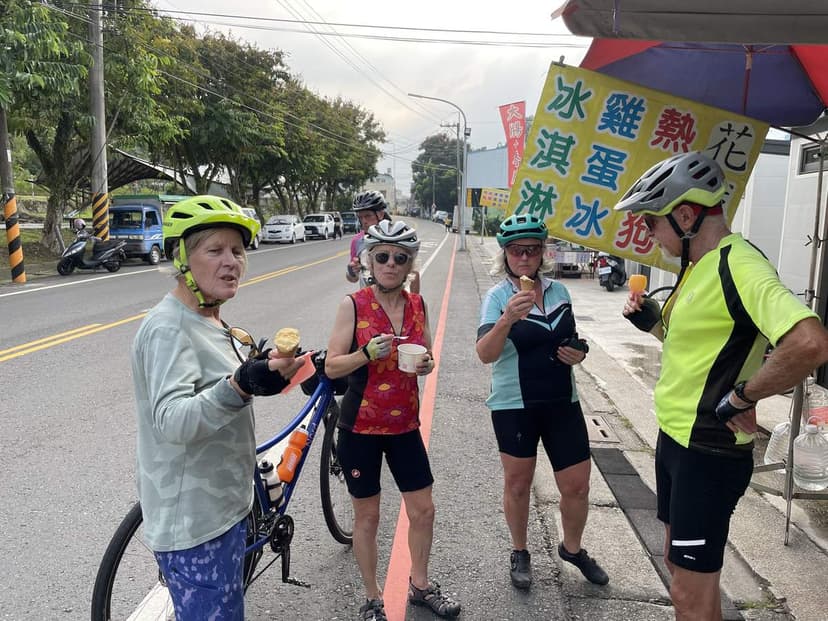
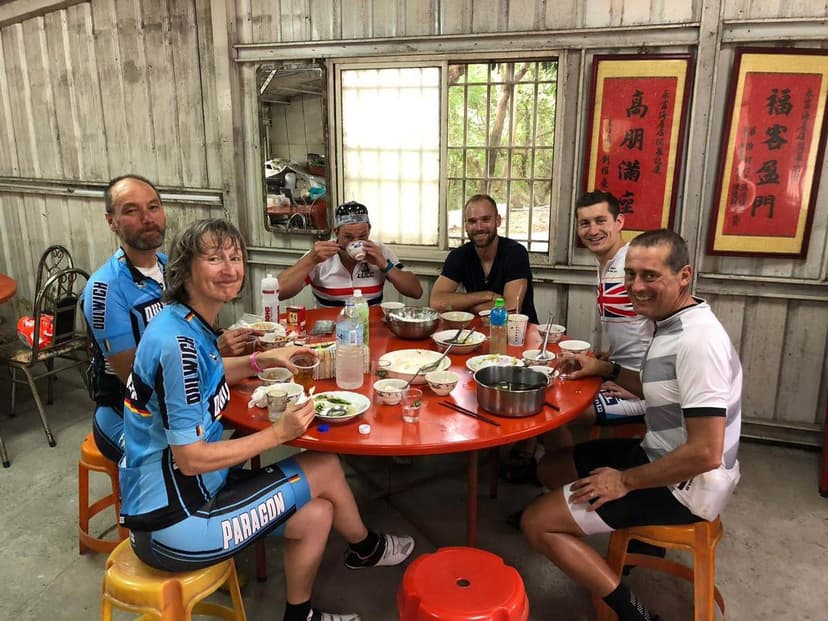
Family-run restaurants, night markets, roadside fruit stalls. Our customers talk about the food more than they talk about the cycling, which is saying something.
For the long version of the case, see our companion post on why Taiwan is the world's best cycling destination, or visit our Why Taiwan page.
Two windows, two months each. The shoulder seasons are your friend, and the high mountains effectively dictate the calendar.
Feb-May
The classic season. Mid-twenties at sea level, mountains clear, rains haven't started, high passes shaken off winter. April is the single best month.
Sep-Nov
Comfortable temperatures, typhoons winding down, best visibility at altitude. October coincides with the Taiwan KOM Challenge race.
Jun-Sep
Hot, humid, and typhoon season. We don't run mountain tours during these months. Coastal flats only, with early starts.
Dec-Feb
Mild and rideable on the south and east, but high mountains can be cold and the KOM road may close on short notice. Shoulder window.
For more on seasonal trade-offs, regional micro-climates, and the typhoon question, see our deep-dive on the best time to cycle in Taiwan.
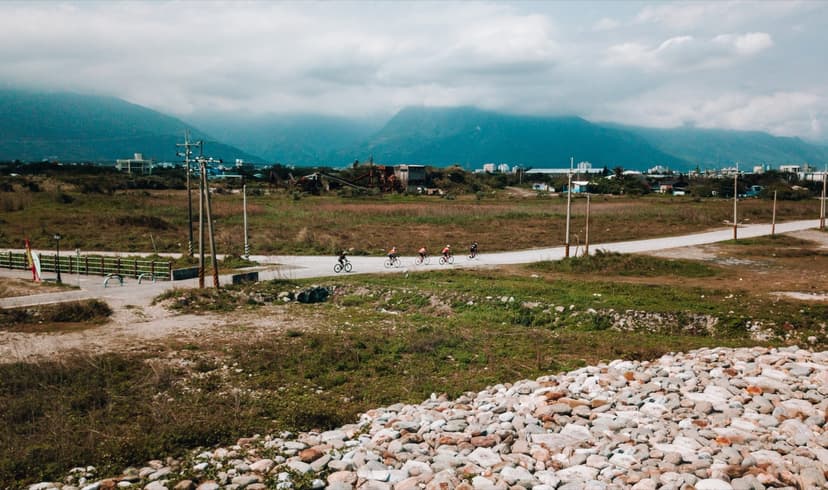
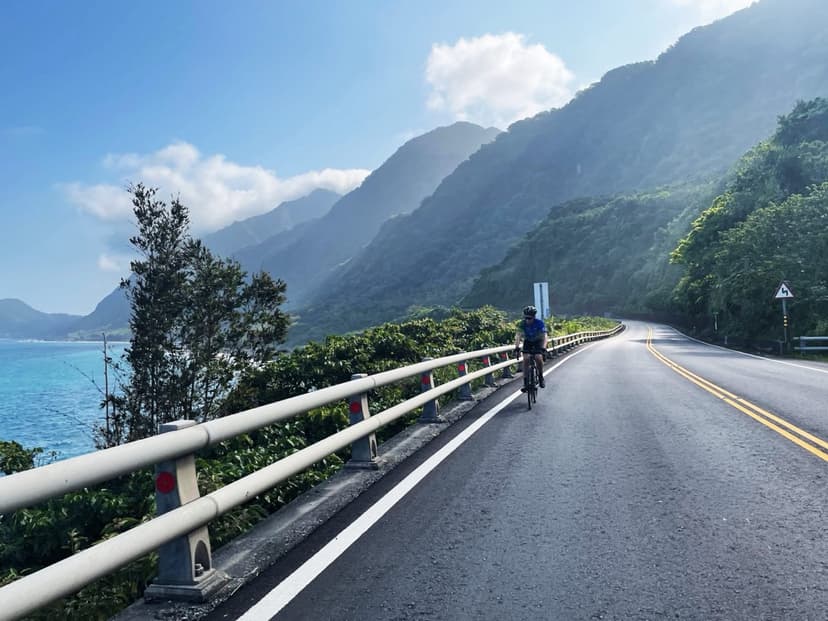
If you ride one road in Taiwan, ride this one. Provincial Highway 11 runs from Hualien to Taitung, hugging Pacific cliffs with the Coastal Mountain Range on your right and the open ocean on your left. It's the kind of scenery that makes you forget your legs exist.
The east is also where Taiwan feels least crowded. Aboriginal villages, rice terraces, hot springs, fishing harbours. A completely different rhythm from Taipei. Our 5-Day East Coast tour is built around this region, and it's the trip we recommend most often to first-time visitors.
Full guide: cycling Taiwan's east coast.
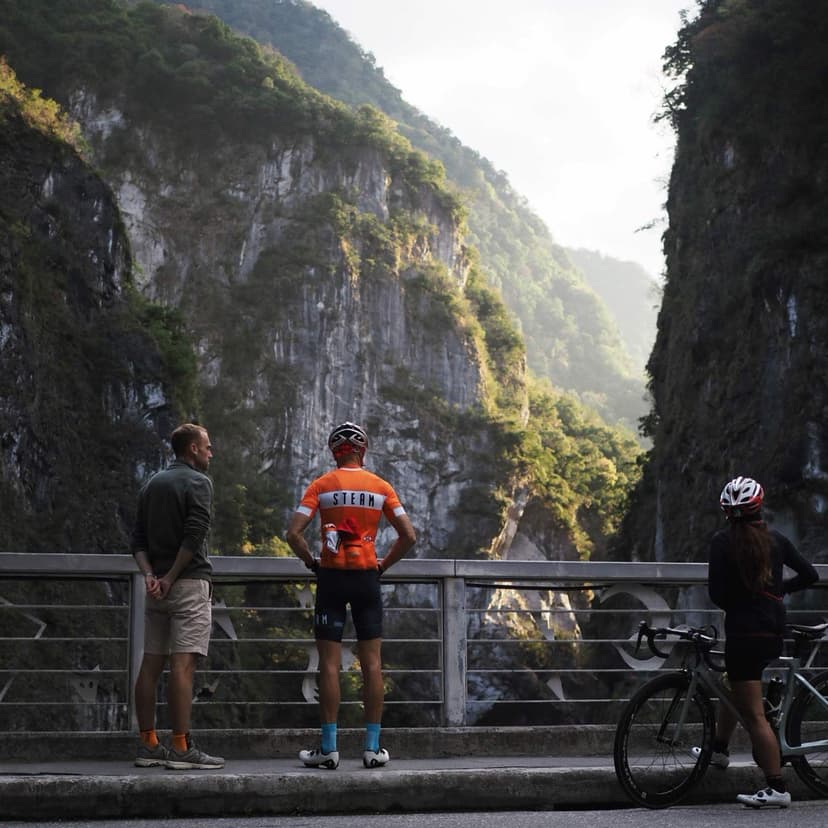
Taroko is a marble gorge cut by the Liwu River, and the road that runs through it is one of the most photographed cycling roads in Asia. Marble walls rise vertically out of the river. The road threads through tunnels carved into the rock.
It's also the start of the Taiwan KOM, so you can ride the gorge as a half-day standalone or use it as the warm-up to the world's longest paved climb. Read our full cycling Taroko Gorge guide for route detail and the timing tricks that turn a busy road into a quiet one.
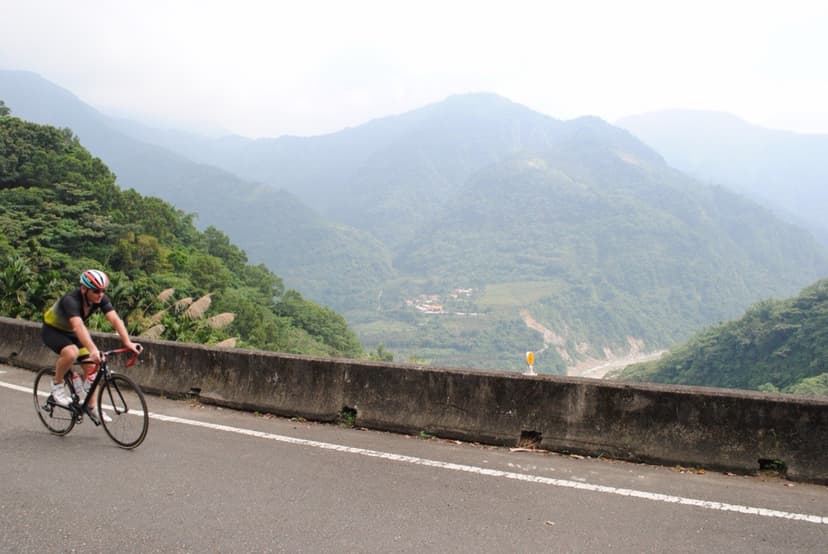
The west is flatter, more populated, and where Taiwanese society lives. Not the most scenic riding on the island, but a circumnavigation goes this way for a reason: the food, the temples, the night markets, the agricultural towns.
You ride through tea country, past pineapple fields, and into Tainan, the old capital, where the cooking goes back four hundred years to the Dutch and Ming settlement of the island, the layered backstory we cover in our brief history of Taiwan. For the full circumnavigation route choices, see our cycling around Taiwan (quan dao) guide.
Within an hour of central Taipei you're on the volcanic uplands of Yangmingshan, climbing 800-metre passes through bamboo forest with the city visible behind you. The north also has the Old Yilan-Taipei Road, a quiet, beautifully graded climb that locals love and most foreign cyclists never find.
If your trip starts or ends in Taipei, build in a Yangmingshan day. It's one of the great urban-adjacent rides anywhere in Asia.
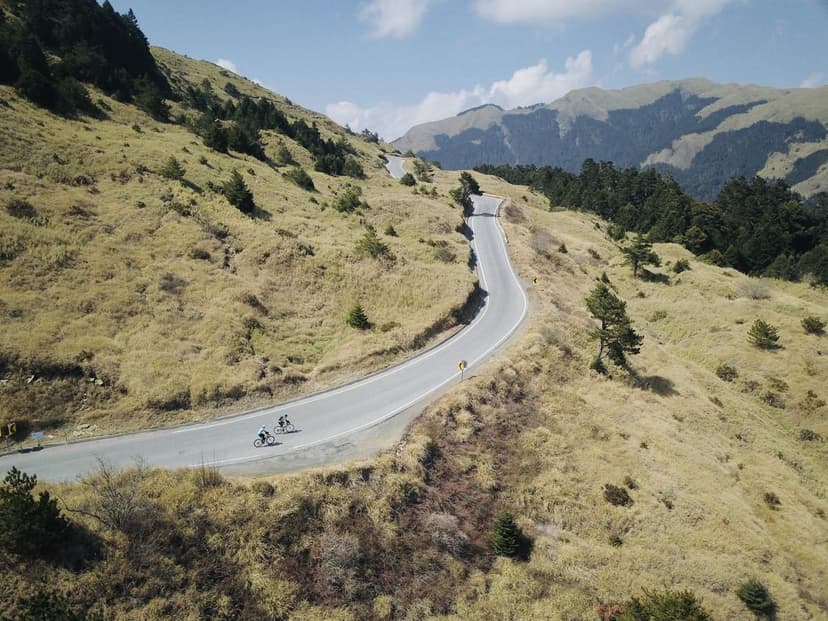
87.5km of continuous ascent from sea level at the entrance of Taroko Gorge to Wuling Pass at 3,275m. The longest paved road climb in the world. Upper switchbacks above Dayuling sustain 15-18%, some of the hardest pitches anywhere.
Honest answer: it depends entirely on the tour, and we don't believe in fitness gating that turns away clients who'd actually have a brilliant week. The 5-Day East Coast suits any regular cyclist comfortable with 80-100km rolling-terrain days. The 7-Day KOM is for trained climbers. Most clients fall somewhere between, and we tailor every itinerary to the group.
On gearing: if you're riding the KOM, you want compact at minimum and ideally a 32 or 34 cassette. The upper sections genuinely warrant it. Bring more gear than you think you need. Sea-level temperatures in spring are warm but Wuling Pass at 3,275m can be cold even in May. Packable rain jacket and arm warmers are non-negotiable.
Deeper dives: training for cycling in Taiwan and what to pack.
Self-guided cycling in Taiwan is genuinely possible. It's also harder than self-guided cycling in Europe or Japan for one specific reason: rural accommodation in Taiwan is often informally run, doesn't take online bookings, and operates in Mandarin only. The good places are not on Booking.com.
Guided cycling solves that and adds three more things: route knowledge you can't replicate from a guidebook, a support vehicle, and a guide who can order at family restaurants where the best food in Taiwan is found. Most riders who try both end up preferring guided in Taiwan, even if they ride self-supported elsewhere.
Honest comparison: self-guided vs guided cycling Taiwan.
This is the part most cyclists underestimate before they arrive and rave about by the end. Taiwanese food culture is built around small, family-run places that are hard to find on a search engine and harder to walk into without Mandarin. Beef noodle soup, oyster omelettes, gua bao, lu rou fan, scallion pancakes, soup dumplings, the whole repertoire is available in roadside stalls that have been doing the same dish for forty years.
The hospitality is the other half. We've had hosts refuse to let our group pay for fruit, hand out cold drinks to passing riders, and stay open after closing because they didn't want a tired group sitting outside.
Deep dive: the best food on a Taiwan cycling tour.
Four core itineraries, all bespoke from a base structure. We tailor route, pace, and accommodation to the group rather than the other way round. If none fits exactly, we build fully custom trips.
Browse all Pedal Taiwan tours or read the full journal for route-specific deep-dives.
Taiwan is one of the best cycling destinations in the world. The island packs Pacific coastline, marble gorges, high-altitude mountain passes, and dedicated riverside cycling paths into an area roughly the size of the Netherlands. Road surfaces are excellent, drivers are unusually respectful, and the country produces more bicycles than anywhere else on earth. Giant and Merida, two of the world's largest bike manufacturers, are both headquartered here.
Two windows. Spring runs February to May and April is usually the standout month: warm at sea level, clear in the high mountains, monsoon hasn't started. Autumn runs September to November and lines up with the Taiwan KOM Challenge race in October. Summer is out, too hot at sea level and that's typhoon season. Winter rides nicely on the south coast and the east, but the high mountains can drop below freezing and the KOM road sometimes closes after a snow.
Depends on the tour. The 5-Day East Coast suits any regular club rider doing 80 to 100km days on rolling roads. The 7-Day KOM is for trained climbers only, that climb genuinely warrants weeks of specific prep beforehand. Most clients sit somewhere in the middle and we shape the route around what they can do, rather than the other way round. If you're unsure where you fit, send us your last big ride and your weekly mileage and we'll tell you which tour works.
Very safe. Taiwan has some of the most respectful drivers of any cycling destination in Asia, well-maintained roads, low crime, and a national culture that broadly views cyclists as part of the road. The main planning consideration is typhoon season (roughly July to September) rather than any traffic or safety concern. Outside that window the conditions are excellent.
Not for our tours. Our local guides handle every interaction with hotels, restaurants, and shops, including the small family places with no English menu and no pictures, which is where the best food is. If you're cycling Taiwan independently, a translation app is enough for the bigger towns, but rural areas and traditional restaurants are harder to navigate without some Mandarin or a guide.
Both are possible. Self-guided works for confident travellers with strong navigation, conversational Mandarin, and the patience to handle logistics in a country where rural accommodation often can't be booked online. Guided removes all of that and adds local route knowledge, support vehicle, and access to restaurants and rides you wouldn't find on your own. Most riders who try both end up preferring guided in Taiwan, even if they ride self-supported elsewhere.