Taiwan doesn’t always make it onto the first draft of a cyclist’s bucket list. It should. As a cycling destination, Taiwan is in a category of its own.
Squeezed into an island roughly the size of the Netherlands, Taiwan manages to pack in more cycling variety than most countries ten times its size. Tropical coastlines, dramatic marble gorges, high-altitude mountain passes, dedicated riverside paths through major cities, it’s all here, and most of it within a few hours of each other. I’ve cycled in the Alps, the Pyrenees, across Southeast Asia, and in a dozen other places that cyclists travel far for. Taiwan is better than all of them.
That’s a strong claim, so let me make the case.
The Roads
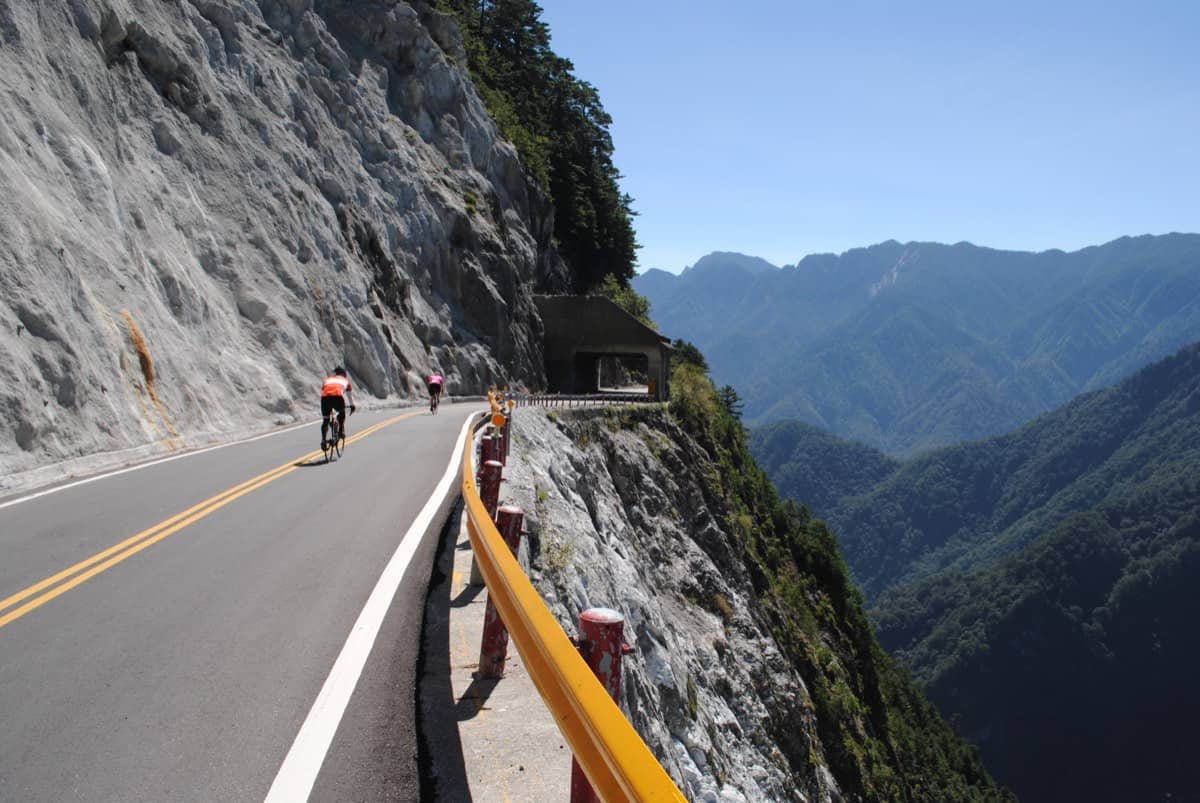
Taiwan’s road quality is excellent, and the variety is extraordinary. The east coast highway, a ribbon of tarmac that clings to sea cliffs above the Pacific for 175 kilometres, is the kind of road that makes you forget you have legs. You’re just moving through scenery.
The mountains are serious. The Taiwan KOM (King of the Mountains) climb starts from sea level at Taroko Gorge and tops out at Wuling Pass, 3,275 metres above the ocean, over 87.5 kilometres of continuous ascent. It’s the longest paved road climb in the world. The road surface is immaculate throughout. If you have any interest in big mountain cycling, this is a bucket list item, our 7-day KOM tour is built around it.
For those who want altitude without the full commitment, there are dozens of shorter mountain routes. The Yangmingshan volcanoes north of Taipei offer excellent riding within an hour of the city. The Rift Valley between Taitung and Hualien is a different kind of riding altogether, flat, open, flanked by mountain ranges on both sides, with an agricultural quietness to it that feels a world away from the Pacific coast just over the ridge.
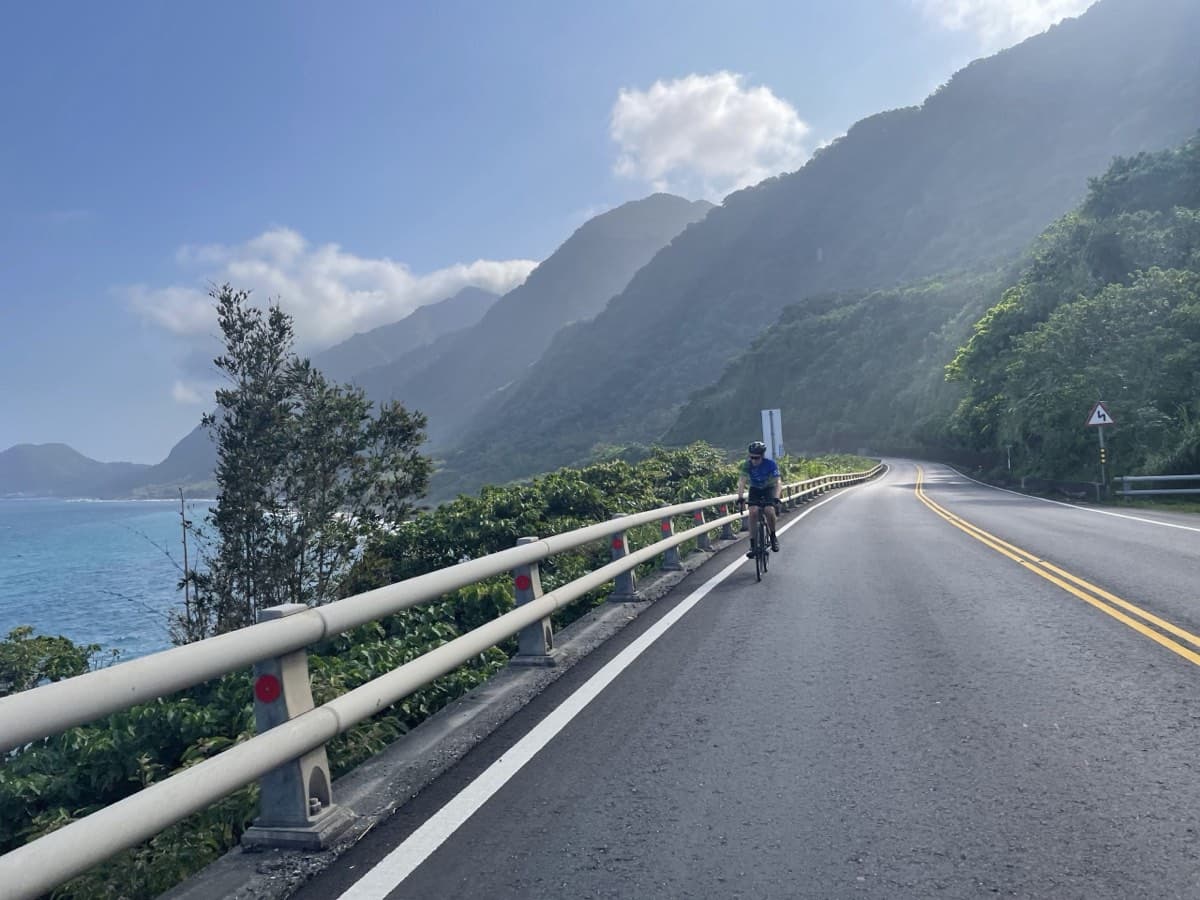
What makes this remarkable is the scale. In a single week of touring, you can ride tropical coastline, carve through a marble gorge, summit a 3,000-metre mountain, and descend into a rice paddy valley. No other country we know of packs that range into such a small space.
The Cycling Infrastructure
Taiwan has invested seriously in cycling. The island has over 4,000 kilometres of dedicated cycling routes, including the famous Cycling Route 1 that nominally circumnavigates the whole island. Dedicated cycling paths run along the major rivers of Taipei and Kaohsiung, making it possible to ride out of either city almost entirely traffic-free until you’re into open countryside.
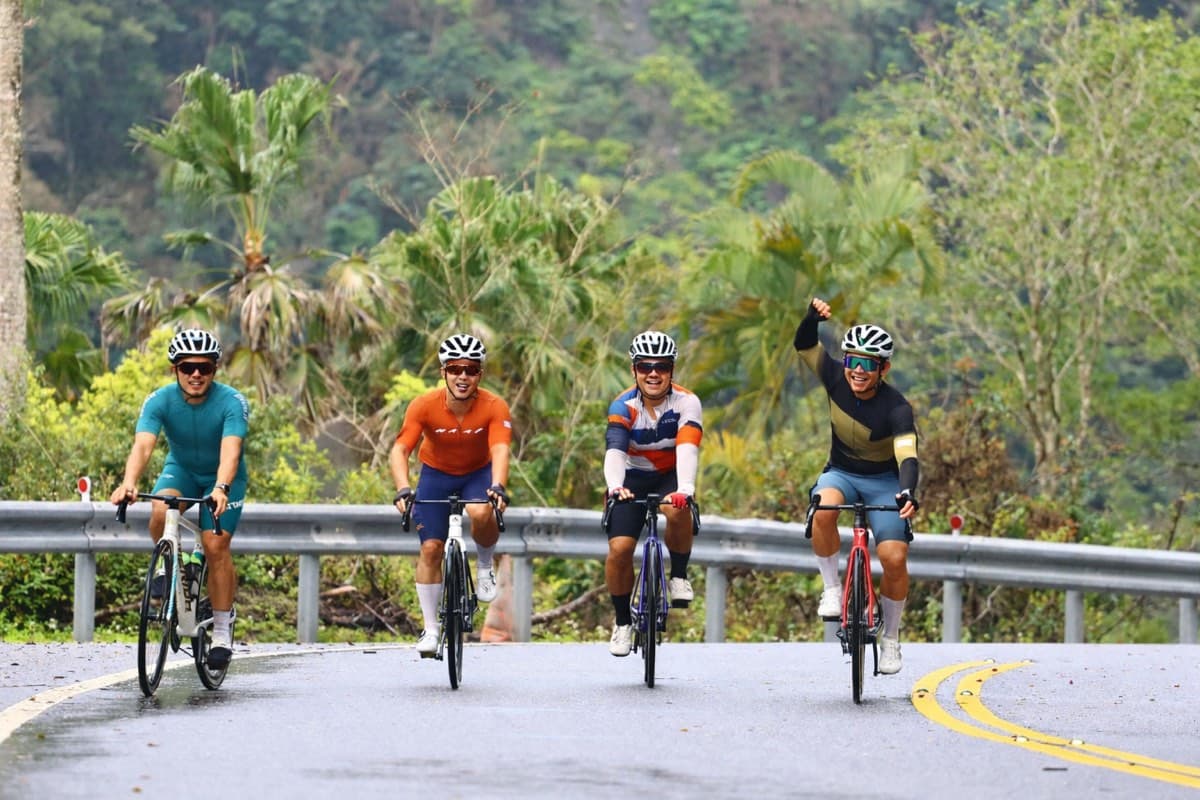
The culture is genuinely supportive. Drivers give cyclists real space, not the occasional grudging half-metre you get on European roads, but actual room. Convenience stores (and there’s a 7-Eleven roughly every few kilometres almost everywhere on the island) stock energy gels, isotonic drinks, and snacks. Local cycling clubs are welcoming to foreign riders, and it’s not unusual to be adopted into a group for a stretch of road by riders who spotted you and decided you looked like you needed company.
Taiwan is also where Giant and Merida, two of the world’s largest bicycle manufacturers, are headquartered. The island produces more bicycles than anywhere else on earth. Cycling is not a hobby here. It’s part of the national identity.
The Food
This might be the most underrated part of a Taiwan cycling trip, and it’s the thing our customers talk about most once they’re home.
Taiwanese food is extraordinary, a unique fusion of indigenous cooking, Japanese technique, and cuisines from across mainland China that arrived with two million refugees in the late 1940s. The result is a food culture unlike anything else in Asia: night markets with hundreds of stalls, tiny family restaurants in every town, roadside stands selling things you’ll spend the rest of your life trying to find elsewhere.
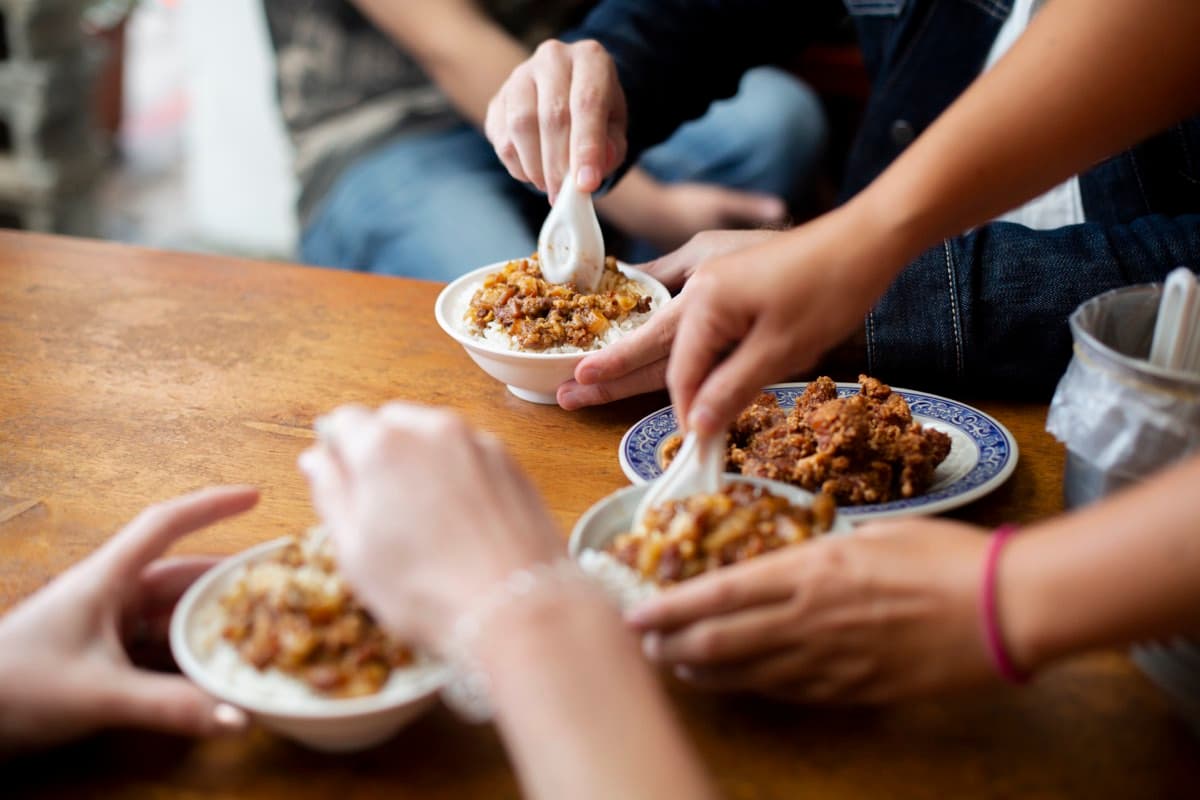
Cycling on good food is a different experience. In Taiwan you are never more than a few kilometres from something excellent. The swordfish sashimi in Chenggong on the east coast. The slow-cooked pork in Taitung. The zongzi, sticky rice dumplings, at a petrol station near the top of the KOM that people drive up a mountain specifically to buy. Our guide James knows every good restaurant between Kenting and Taipei, and on our tours he orders for the group in Mandarin at places where the menu has no pictures and no English. You will eat better on a cycling holiday here than almost anywhere else in the world.
The People and the Safety
Taiwanese hospitality is genuine and it changes how you experience a place.
You will be welcomed into restaurants by owners who don’t speak your language but are visibly pleased you’ve turned up. You will be waved at from the roadside by farmers who have no particular reason to wave at a cyclist. You will be cheered on by strangers on the final climb of a long day, Taiwanese cyclists treat suffering on a mountain as something to be enthusiastically supported, not politely ignored.
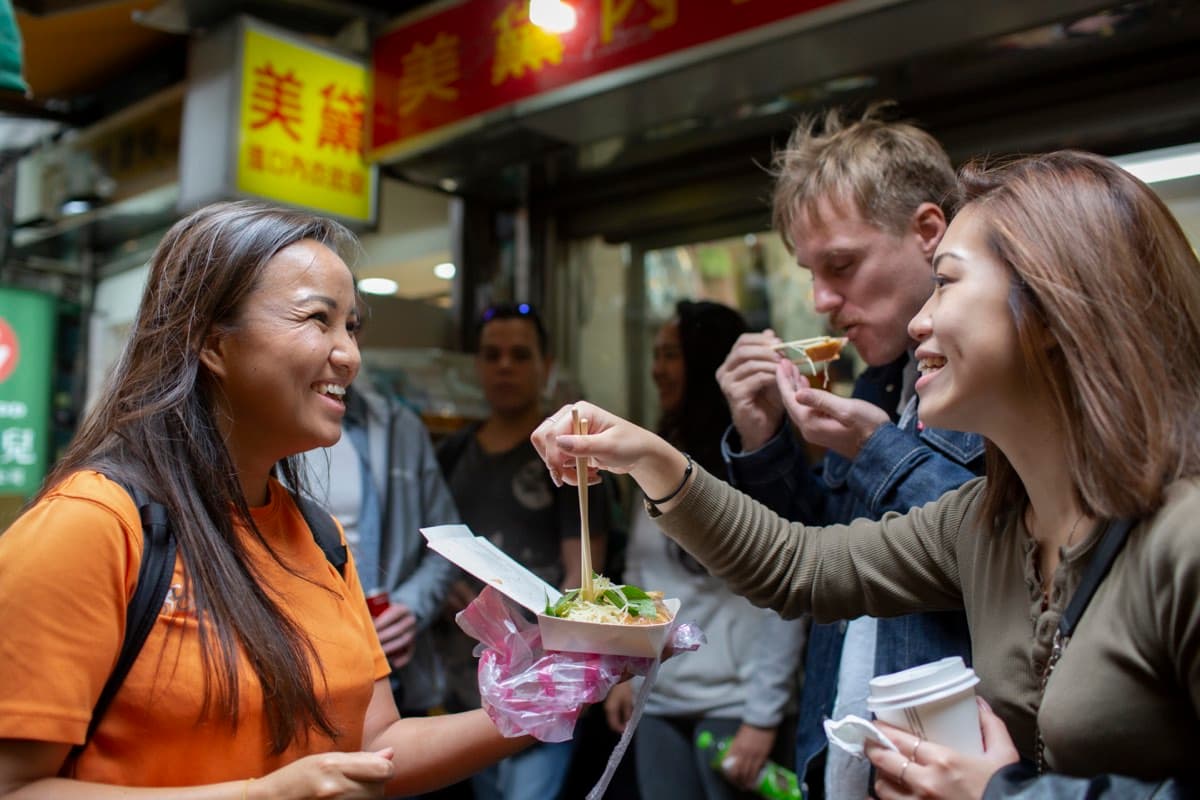
Unlike some cycling destinations where foreign riders are tolerated at best, in Taiwan you feel like a welcome guest. The island has been hosting international cycling events for years and has a warmth towards visiting cyclists that makes a difference on hard days.
Taiwan is also exceptionally safe by any standard, and particularly by the standards of Asian cycling destinations. Roads are well-maintained and well-lit. Drivers are respectful and predictable. Crime is minimal, you can leave your bike outside a restaurant and come back to find it exactly where you left it. The food hygiene standards are high by regional standards; it is genuinely rare for visiting cyclists to get ill from what they eat.
Typhoons are a real consideration, they’re why we run tours in spring and autumn rather than summer, but outside the peak typhoon season the weather is predictable and manageable. If a storm does arrive, Taiwan’s infrastructure for handling it is well-developed and our guides have years of experience adapting routes around it.
Why It Beats the Alternatives
The Alps are beautiful, and the Pyrenees are magnificent. But they are roads that cyclists have been riding for a hundred years, covered in a hundred guidebooks, with familiar coffee stops and familiar towns. Taiwan is different. The east coast highway feels like a discovery. The KOM is a genuine adventure, not a tourist attraction. The small restaurants in the Rift Valley are places that haven’t been written up by anyone.
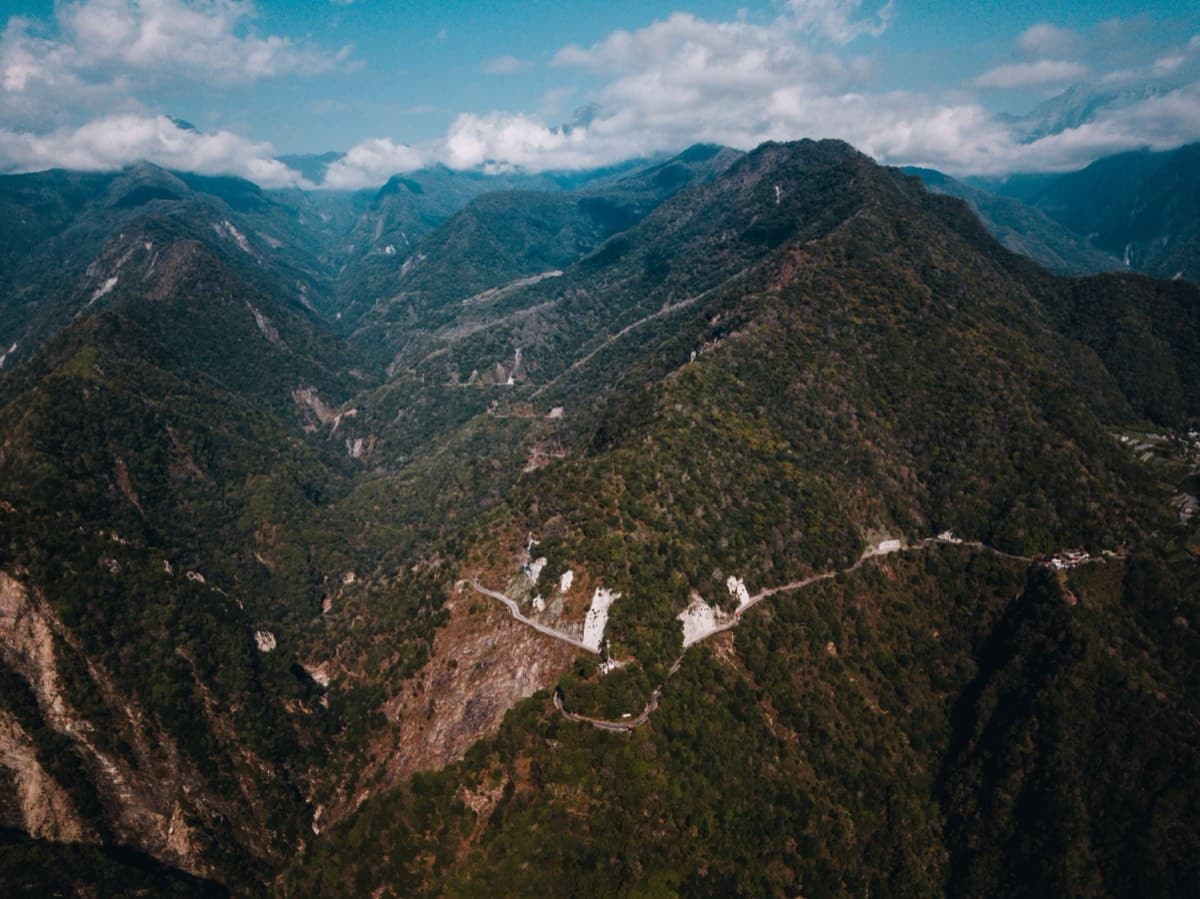
Taiwan is what cycling felt like before the world caught up.
It won’t stay a secret forever. But right now, it’s still possible to ride some of the world’s best roads in the company of people who are genuinely happy to see you there.
Frequently Asked Questions
Is Taiwan good for cycling? Taiwan is widely regarded as one of the best cycling destinations in the world. It has over 4,000 kilometres of dedicated cycling routes, excellent road surfaces, respectful drivers, and terrain that ranges from flat Pacific coastlines to high-altitude mountain passes. Giant and Merida, two of the world’s largest bicycle manufacturers, are both headquartered here, and cycling is genuinely part of the national identity.
What is the best cycling route in Taiwan? For scenery and variety, the east coast highway between Taitung and Hualien is hard to beat, 175 kilometres of Pacific coastline and mountain views. For the ultimate challenge, the Taiwan KOM from sea level at Taroko Gorge to Wuling Pass at 3,275m is in a category of its own as the world’s longest paved road climb.
Is Taiwan safe for cycling? Very. Taiwan has some of the most respectful drivers of any cycling destination in Asia, well-maintained roads, and minimal crime. The main weather risk is typhoons, which is why experienced operators run tours in spring and autumn rather than summer. Outside typhoon season, the conditions are excellent.
Do I need to speak Mandarin to cycle in Taiwan? For navigation, a good GPS is sufficient, most major roads are well signposted. For food and accommodation, having a guide who speaks Mandarin makes a significant difference. On our tours, James orders for the group at the kind of local restaurants that have no English menu and no pictures, and that’s where the best meals happen.
When is the best time to visit Taiwan for cycling? Spring (March-May) and autumn (October-November) are the two ideal windows. Both offer predictable weather, comfortable temperatures, and clear conditions at altitude. October is particularly special, the Taiwan KOM Challenge race takes place in Hualien and the atmosphere across the island’s cycling community is exceptional. See our full season guide.
Ready to experience it for yourself? Our 16-day Full Island Tour covers the whole island end-to-end, east coast, mountains, south, and Taipei. The 14-day Discover Taiwan tour packs the same highlights into a shorter schedule. Drop us a line with your dates and we’ll sort out the rest. If you’re still researching, our complete guide to cycling in Taiwan covers seasons, regions and what to bring.