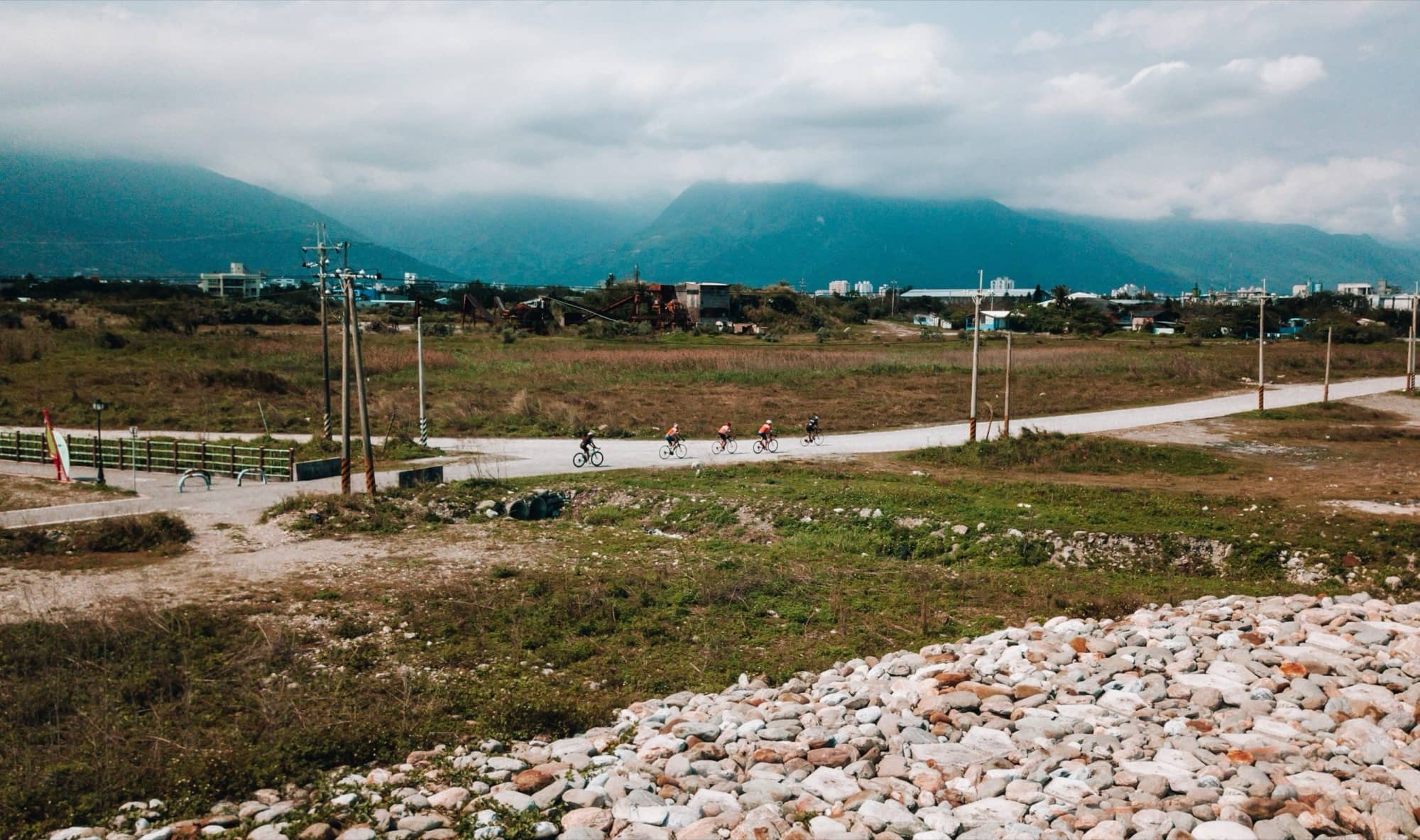
For a lot of riders who have experience of self-guided trips, they often think about Taiwan as a location to do it, but there are a few extra complications that you get with Taiwan that are perhaps a little bit more unusual than other locations around the world.
One of the biggest challenges is the lack of English spoken outside of Taipei. It’s still very difficult, once you leave the major cities, to get by in Taiwan only speaking English. Most people only speak Mandarin or the local Taiwanese dialect, and road signs, menus, etc., will always only be in Mandarin. Going around without a guide and with limited Mandarin speaking skills, you’re going to have to be very comfortable with some pointing and fudging, which can be fun in itself but can also make the experience a little bit less comfortable and secure if something goes wrong or if you’re very keen to make sure you’re trying all the different local specialties when it comes to meals, or if you have dietary requirements. Anything like that.
The other problem is that rural Taiwan is still very rural, and particularly if you want to ride any of the mountain passes, there is simply not a network of drivers in rural Taiwan that can make luggage transfer possible. This means that if you want to do a self-guided trip in Taiwan, really the only options are to do it on a bike with panniers, where you’re carrying your own luggage. That, of course, makes any mountain riding significantly more difficult, because not only are you having to carry yourself up some pretty big climbs, but you’re also having to carry all your gear.
What Self-Guided Cycling Actually Means in Taiwan
In Europe, self-guided operators run a full stack: pre-picked hotels, detailed route notes, a support number if things go wrong, and luggage transfer between overnight stops. In Taiwan, that full package barely exists in the mainstream market. What you’ll typically get when you search for a self-guided bike tour in Taiwan is one of three things:
- A set of GPX files following Cycling Route 1, the government-promoted round-island route, usually without luggage transfer
- A rental bike and a few route suggestions from a Taipei bike shop
- A DIY trip pieced together from your own research, using booking.com, Komoot, and Google Translate
None of those are wrong. They all work for some people. But none of them is the same thing as a European self-guided package, and that difference is worth understanding before you book.
A quick word on Cycling Route 1 (CR1). It’s Taiwan’s official signposted round-island route and the default recommendation on most cycling tourism sites. We don’t ride it and we don’t recommend it, especially on the west coast, where it tracks fast and frankly grim main roads for long stretches. The east coast bits are better, but even there the official route sidesteps most of the best riding. We’ve got a longer piece coming on why CR1 undersells Taiwan. Short version for now: don’t follow it end-to-end and expect it to be the round-island trip you came for.
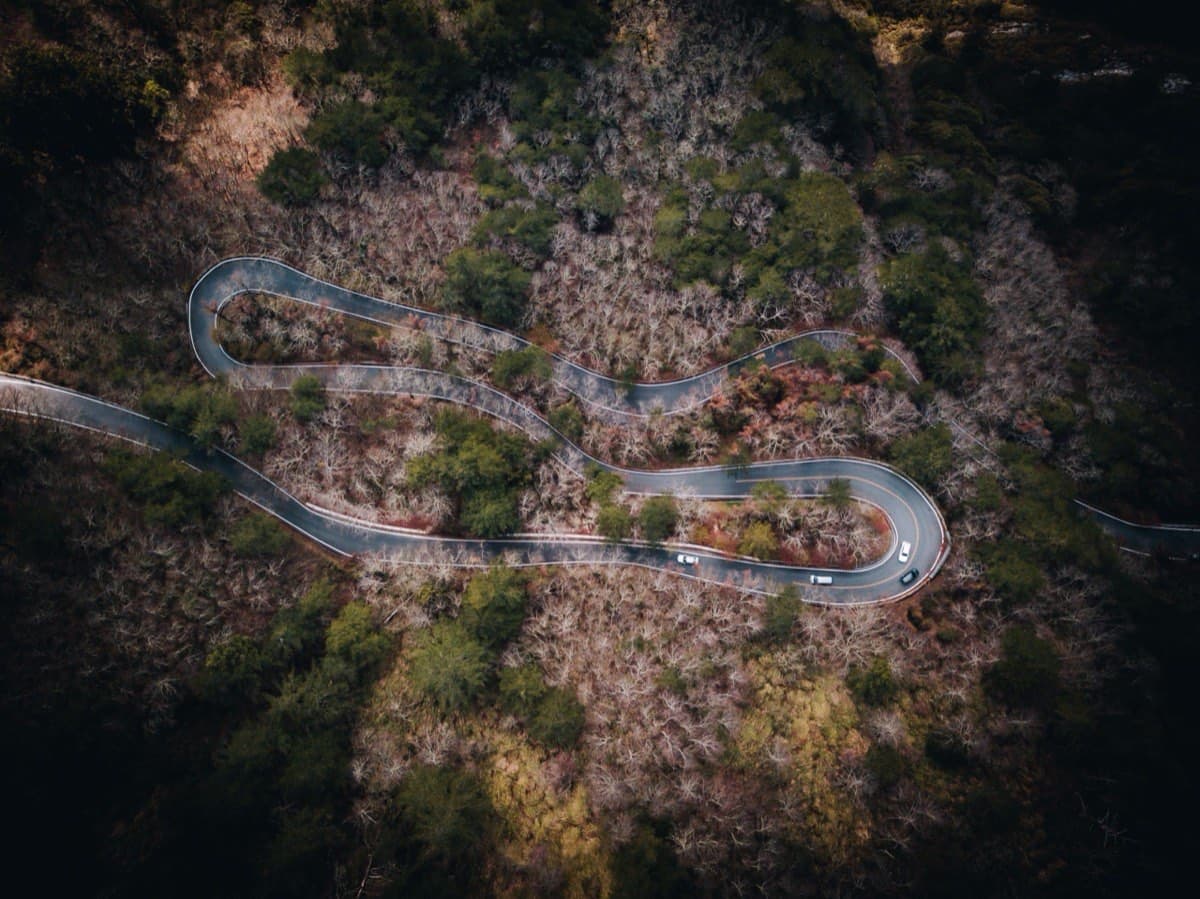
Where Taiwan is Different from European Cycling Destinations
Europe spoils cyclists. Cafés know how to feed you. Drivers are used to sharing country roads with groups. Every small town has a bike shop. Even the road signs are, at worst, readable with schoolboy French. None of that really carries over to Taiwan.
Language. English gets you through the hotel reception desks in Taipei, Taichung and Kaohsiung. Step outside those three cities and it’s genuinely not spoken: not in restaurants, not in bike shops, not in the 7-Elevens in small mountain towns, not in rural police stations. Taiwanese people are famously warm and will go a long way to help, but problem-solving still comes down to pointing and Google Translate. That’s charming over a coffee and much less charming at 6pm on a Sunday with a cracked rim.
Navigation. Road signs are Chinese-character-first. Some of the main roads have bilingual signage, but turn off the highway and it quickly disappears. Google Maps’ cycling routing in Taiwan is unreliable; it will happily send you up a scooter-only mountain access road or through a tunnel that’s closed to bikes. Komoot is better but still struggles with Taiwan-specific knowledge, like which segments of the KOM route are currently rideable and which have been redesigned around new tunnels. A plan that works on paper doesn’t always mean a plan that works on the road.
Mechanical support. On the west coast and in the major cities, bike shops are everywhere. Giant and Merida are both Taiwanese companies and their home-market presence is enormous. Ride east of the central mountain range, or up into the KOM climb, and shop density drops sharply. Finding a shop on a Sunday, or one that speaks English, drops it further. A snapped hanger on a Friday night in a small Rift Valley town is not a 10-minute fix.
Hotels. Taiwan’s best small places to stay, the family-run mingsu (B&Bs) on the east coast, the farmhouses in the Rift Valley, the small hot-spring hotels near Taroko, don’t take bookings through booking.com. They take phone reservations in Chinese. Bookable online in English generally means “bigger chain hotel on a main road,” which is rarely the place you actually want to stay after a day in the mountains.
Route knowledge. The roads change. Sections of the Suhua Highway that were historically dangerous for cyclists have been rerouted around new tunnels. The KOM climb has had landslide closures. Some segments are rideable only with a permit. A lot of this information is current and practical; much of it is in Chinese only. A GPX file from two years ago may send you into a closed tunnel.
The Luggage Problem
This is the single biggest gap between European and Taiwanese self-guided cycling, and it’s worth calling out on its own. In France, Italy, and Spain, the big self-guided operators move your luggage between hotels every morning. You ride light. It’s a standard, priced service with an established network of drivers.
In Taiwan, that network of drivers simply doesn’t exist in the rural areas that matter for cycling. There are couriers, but they don’t specialise in cycling tourism, and their networks don’t reach the small mountain and east-coast stops cyclists actually want to overnight in. There is no established infrastructure for moving riders’ luggage between hotels on the routes Taiwan does best.
The practical result is that self-guided cycling in Taiwan almost always means carrying your own gear on the bike. Panniers. A saddlebag full of clothes. Ten or fifteen extra kilos.
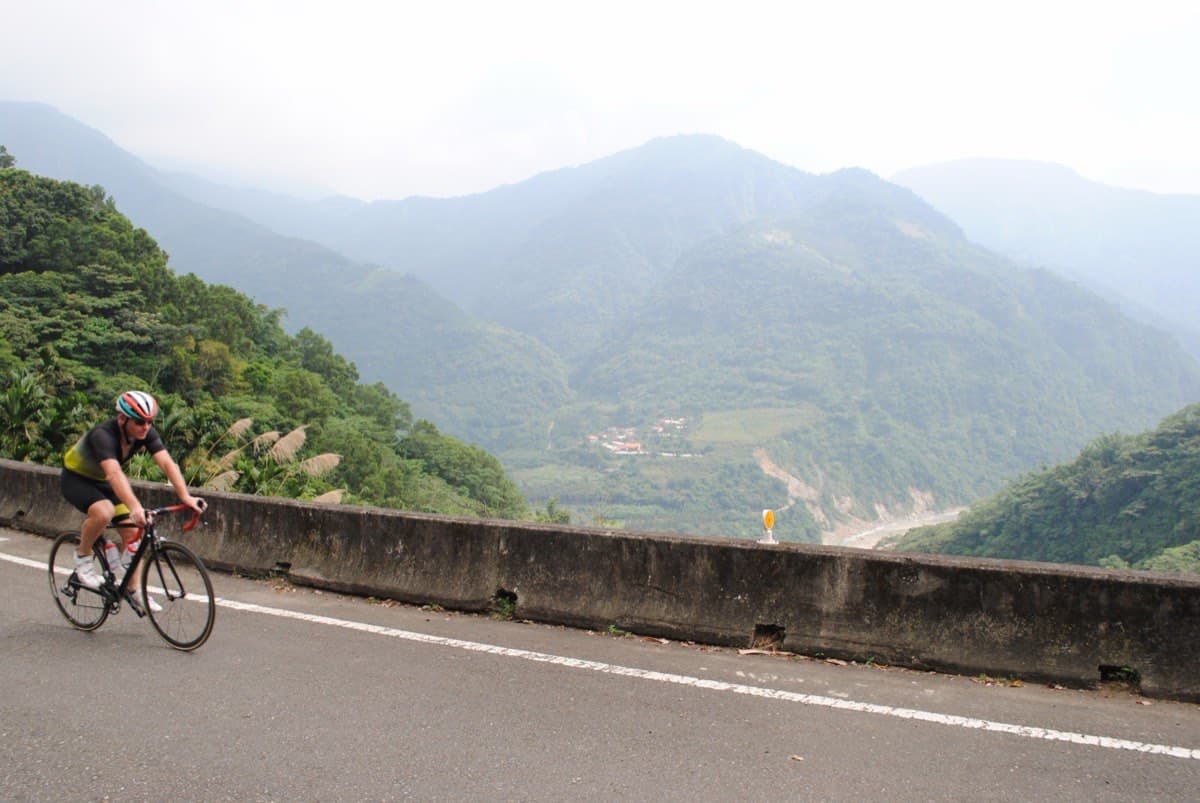
On flat roads, that’s slower and more tiring but manageable. On the Taiwan KOM, 87.5km and 3,275m of continuous climbing, it’s a non-starter for all but a handful of very strong riders. Same for the Yilan-to-Lishan-to-Wuling approach from the north, and the Sun Moon Lake to Wuling climb from the south-west. Taiwan’s best cycling is in the mountains, and the mountains are effectively closed to self-guided cyclists who have to carry their own kit.
A support vehicle isn’t a nice-to-have on Taiwan’s mountain routes. For most riders it’s what decides whether the ride happens at all.
Who Each Approach Works For
Self-guided is the right call in Taiwan when you:
- Speak or read Mandarin, or are travelling with someone who does
- Have been to Taiwan before and already know which roads you want to ride
- Are happy to build your own route rather than follow CR1, and have the local research to avoid the bad sections
- Are content carrying your own luggage and staying in whichever hotels take online bookings in English
- Are riding the flatter coastal sections rather than the mountains, and are relaxed about improvising when something’s closed
Under those conditions, Taiwan rewards independent cyclists. It’s one of the safest countries in the world to cycle in, traffic is generally respectful, 7-Elevens are every few kilometres with real coffee and warm steamed buns, and the train network carries bikes cheaply if you run out of legs.
Book guided if you:
- Want to ride the KOM, or any of the high mountain routes via Lishan, Sun Moon Lake, or the south-western approach
- Want to cycle the full island without navigating, booking hotels, or problem-solving in Mandarin for two weeks
- Want to see the east coast and the Rift Valley, where the best hotel options are small local places off the English booking system
- Have dietary requirements that need explaining in Chinese
- Are travelling in a mixed-ability group where a support vehicle and an e-bike option matter
- Want to stop at James’s favourite noodle shop in Nanshan, or the best swordfish sashimi in Chenggong, without having to find them yourself
The reason our 7-Day KOM, 5-Day East Coast, 14-Day Discover Taiwan, and 16-Day Full Island exist in the shape they do is that they all cross ground where going it alone tends to mean a compromised trip.
What a Guided Tour Adds (and Why It Costs More)
A guided tour is more expensive than a self-guided version of the same route. That’s honest. Here’s what you’re paying for on a Pedal Taiwan trip.
A support vehicle for every ride. This is the luggage solution, the mechanical backup, the cold-drink stop, the wet-weather bailout. It’s the thing that makes the big rides possible.
James knows Taiwan like a local. Two decades of riding the island, which is why he knows which road’s closed this week before Google does, which noodle shop is worth stopping for and which is just the first one you’ll see, and where you can duck in when the weather turns on you above Taroko.
Every hotel pre-booked at the places you’d actually want to stay. The small mingsu, the hot-spring hotel in Ruisui, the farmhouse in Lishan. Not the chain hotel on the main road.
Mechanical support. Our support vehicle carries a full workshop. If something breaks, it gets fixed roadside and you keep riding.
Flexibility you don’t get self-guided. Legs gone? The van is there. Weather turns ugly over Taroko? We reroute. Landslide on the pass? We already know the workaround because we ride these roads every week.
The small moments that don’t fit on a map. The tea farmer in Ruisui who waves the group in for a cup. The morning market in Taitung that you’d walk past because nothing’s signposted in English. The roadside papaya stall that’s only there in September. You find these by riding with someone who’s been down these roads hundreds of times.
You can cycle Taiwan self-guided, and for some trips it’s the right call. But for the mountain routes, for the east coast, and for the full-island loop, guided isn’t a luxury upgrade. It’s what makes the trip what you came for.
Frequently Asked Questions
Can you actually self-guide the Taiwan KOM? In theory, yes. In practice, very few people do it well. The climb is 87.5km and 3,275m of continuous ascent, and doing it with luggage on the bike turns an already-hard day into a borderline-impossible one. A support vehicle is the difference between a memorable achievement and a ride you may not finish. See our full KOM guide for the detailed route breakdown.
Is there a self-guided tour operator in Taiwan that includes luggage transfer? Very few, and none at the scale of European self-guided operators. The west-coast Cycling Route 1 has some operator-led support, but for the east coast, mountain routes, and the full-island loop, luggage transfer is rarely offered as a packaged service to English-speaking visitors.
Can I cycle Taiwan independently if I don’t speak Mandarin? Along the west coast and in cities like Taipei, Taichung and Kaohsiung you’ll get by with English, Google Translate and goodwill. Once you’re on the east coast or in the mountains the language gap starts costing you real time. Finding the right hotel, ordering something you can actually eat, explaining what broke on your bike. It’s not impossible, and plenty of people do it, but you’ll spend a lot of each day on admin rather than riding.
Is Taiwan safe to cycle solo? Exceptionally safe. Taiwan has one of the lowest violent crime rates in Asia, drivers are generally respectful of cyclists, and the road infrastructure is good. The challenges with self-guided cycling here are logistical, not safety-related.
Should I ride Cycling Route 1 self-guided? Honestly, no. It’s Taiwan’s official signposted loop and every tourism site will point you at it, but a lot of CR1, especially the western half, hugs busy main roads and skips the riding you actually came for. If you want to go independently, plan your own loop around the east coast and Rift Valley, and you’ll have a far better trip than anyone who follows the signs the whole way round.
Taiwan is a genuinely great cycling destination and there’s no single right way to ride it. Confident independent rider, happy with the west coast as your playground, comfortable improvising in Mandarin? Self-guided works well. Want the mountains, the east coast or a proper full-island loop without burning half your holiday on logistics? See our guided tours or get in touch and we’ll help you work out which trip fits. Either way, our complete guide to cycling in Taiwan is the place to start.