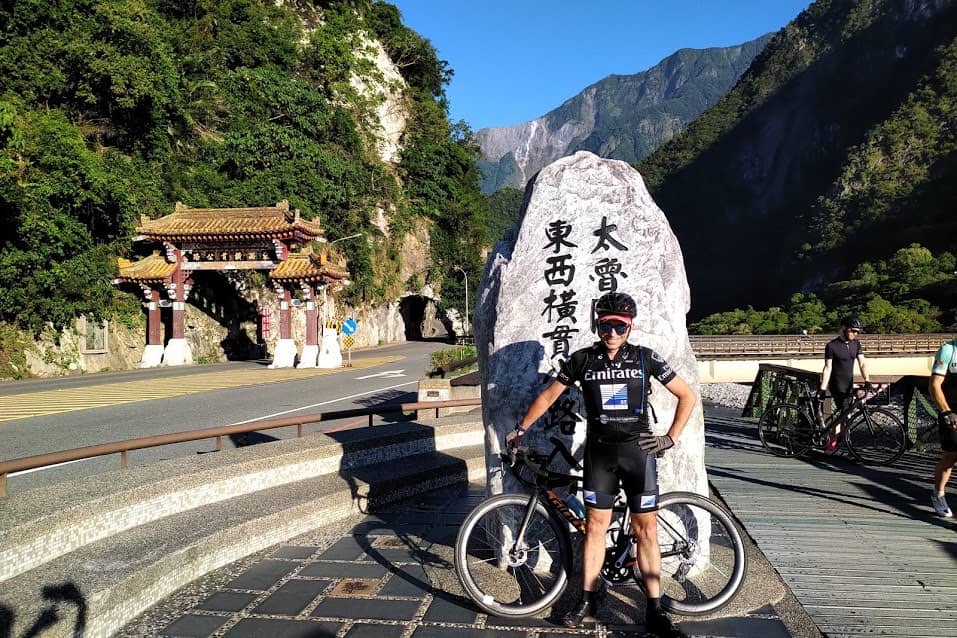
Taroko Gorge is just one of those places that you can’t quite capture in a photo. We’ve spent hours and hours and hours photoing and videoing cyclists going through the gorge, and I’m still not quite sure that we’ve captured it right. You really need to go through it to get a sense of the sheer scale of what you’re riding through. Of course, on a bicycle you can take all of that in while you go, as opposed to being sat on a coach and getting off at certain points.
Most people see Taroko from a tour bus. They get twenty minutes at Swallow Grotto, a photo at the entrance arch, and a lot of glass in the way of the view. On a bike it’s a different place entirely. The temperature drops as the walls close in, the river noise comes up, and you stop whenever you feel like it, which ends up being often.
The riding is easier than the scenery makes it look. The 20km from the gorge entrance to Tianxiang averages 2.5%, which puts it well within reach of anyone with a reasonable level of fitness.
The Route: Gorge Entrance to Tianxiang
The cycling route through Taroko follows Highway 8, starting at sea level where the marble walls of Taiwan’s coastal range meet the Pacific Ocean. From here, the road winds westward along the Liwu River for 20 kilometres, climbing gently to Tianxiang at around 500 metres elevation.
The road has been blasted and carved directly into the cliff face in many sections, at points, the gap between the marble walls and the river below is so narrow that the engineering feels almost impossible. This is not a manicured cycle path. It’s a real mountain road, shared with cars and buses, but the surface is excellent and the gradients never bite.
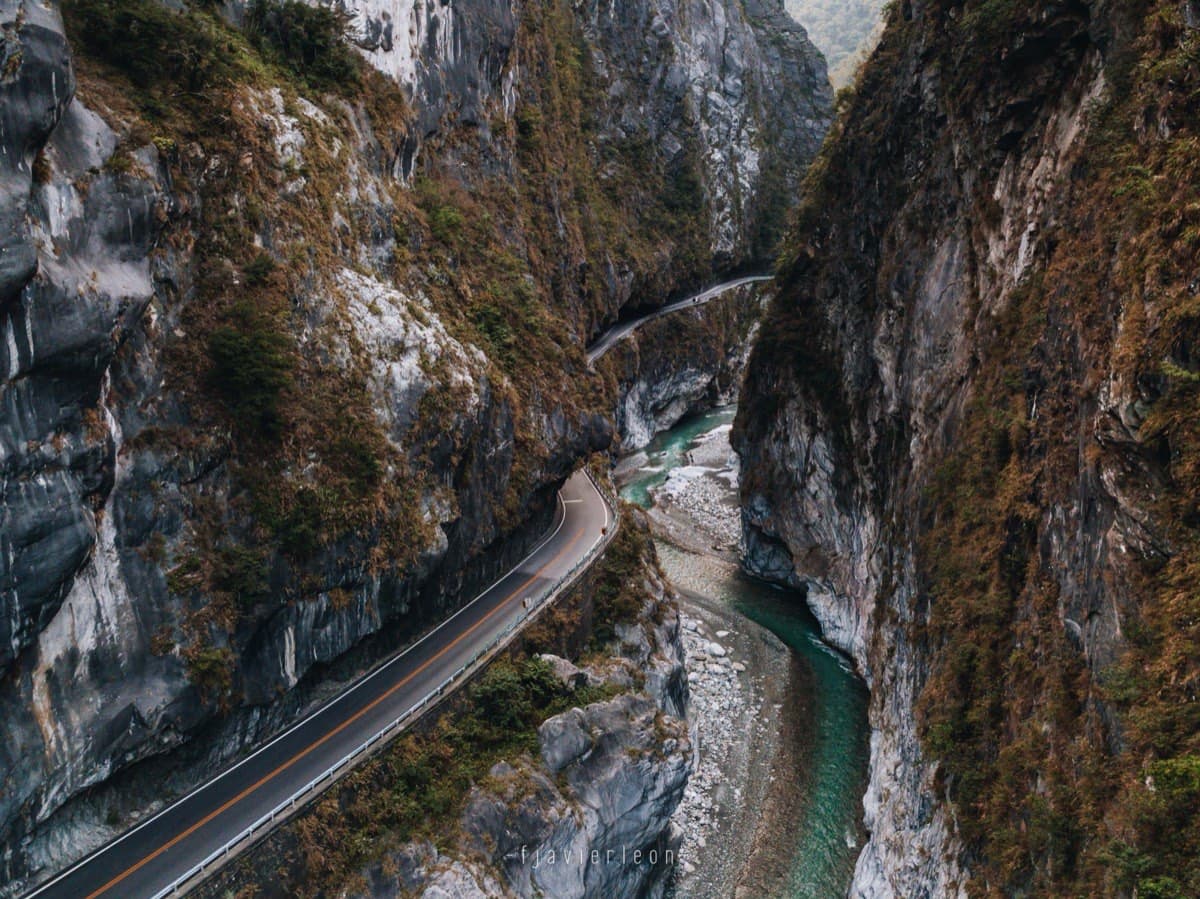
Three landmarks define the ride through:
Changchun Shrine, perched on the cliff face about 2km in, this shrine sits beside a waterfall that cascades down the marble wall. It’s dedicated to the workers who died building the Central Cross-Island Highway in the 1950s, retired Nationalist soldiers who picked up the project the Japanese had started decades earlier (the road’s older origins, and the broader history of Taiwan, are worth knowing while you ride). It’s the first moment where the scale of the gorge truly hits you.
The postcard section is Swallow Grotto, where a lot of the tour coaches will stop and where you want to be before they start coming through, really. The river flowing through the gorge has pockmarked the marble walls, partly during typhoon season when big rocks are washed down the cliffs and take chunks out of it. Those pockmarked cliffs are now home to swallows, because those holes are an ideal nesting ground for them.
The whole gorge itself is spectacular, and even after Tianxiang, which is where most people turn around, the climb continues to take your breath away in more ways than one. Tianxiang is where the gorge ride ends and, for those continuing, the Taiwan KOM climb begins in earnest.
What Makes Cycling the Best Way to See Taroko
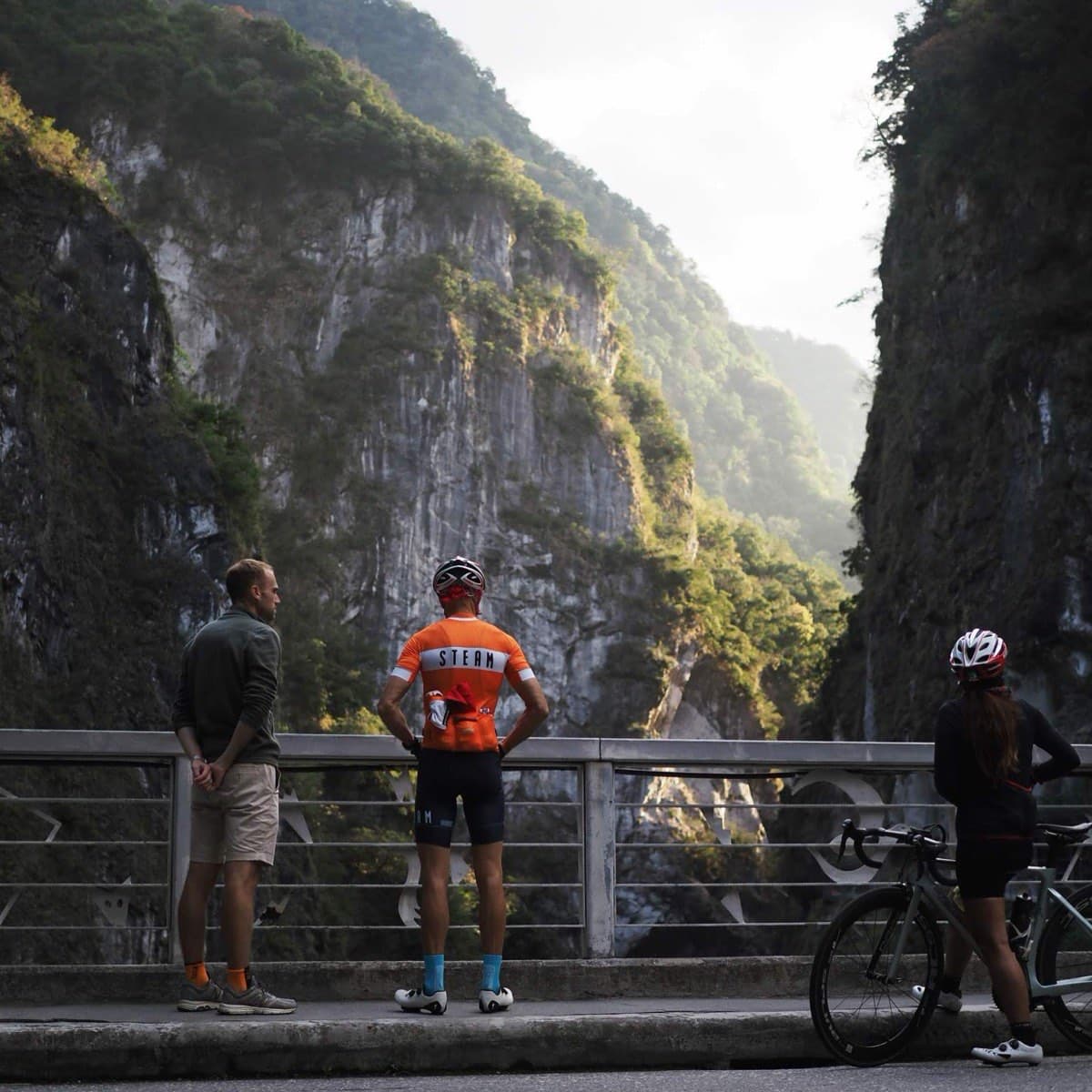
Tour buses move quickly through the gorge, stopping at two or three designated viewpoints before turning around. On a bike, the gorge reveals itself gradually. The temperature shifts, the light changes as the walls narrow and widen, and the sound of the river rises and falls. You notice things a bus passenger never will, a waterfall appearing from nowhere in the cliff above, a troop of Formosan macaques watching from a ledge, the way the marble changes colour from grey to white to blue-green depending on the mineral content.
There’s also a practical advantage: the road is narrow, and when two buses pass each other at Swallow Grotto, everything stops. On a bike, you slip through. You’re never stuck behind anyone, and you can pull over wherever the view demands it, no car park required.
The ride is part of both our King of the Mountains tour and our 14-day Discover Taiwan tour. On the KOM tour, the gorge is the opening act before the climb to Wuling Pass. On the Discover Taiwan, it’s one of many highlights across the island, but most guests tell us afterwards that Taroko was the day they’ll remember longest.
When to Go and What to Expect
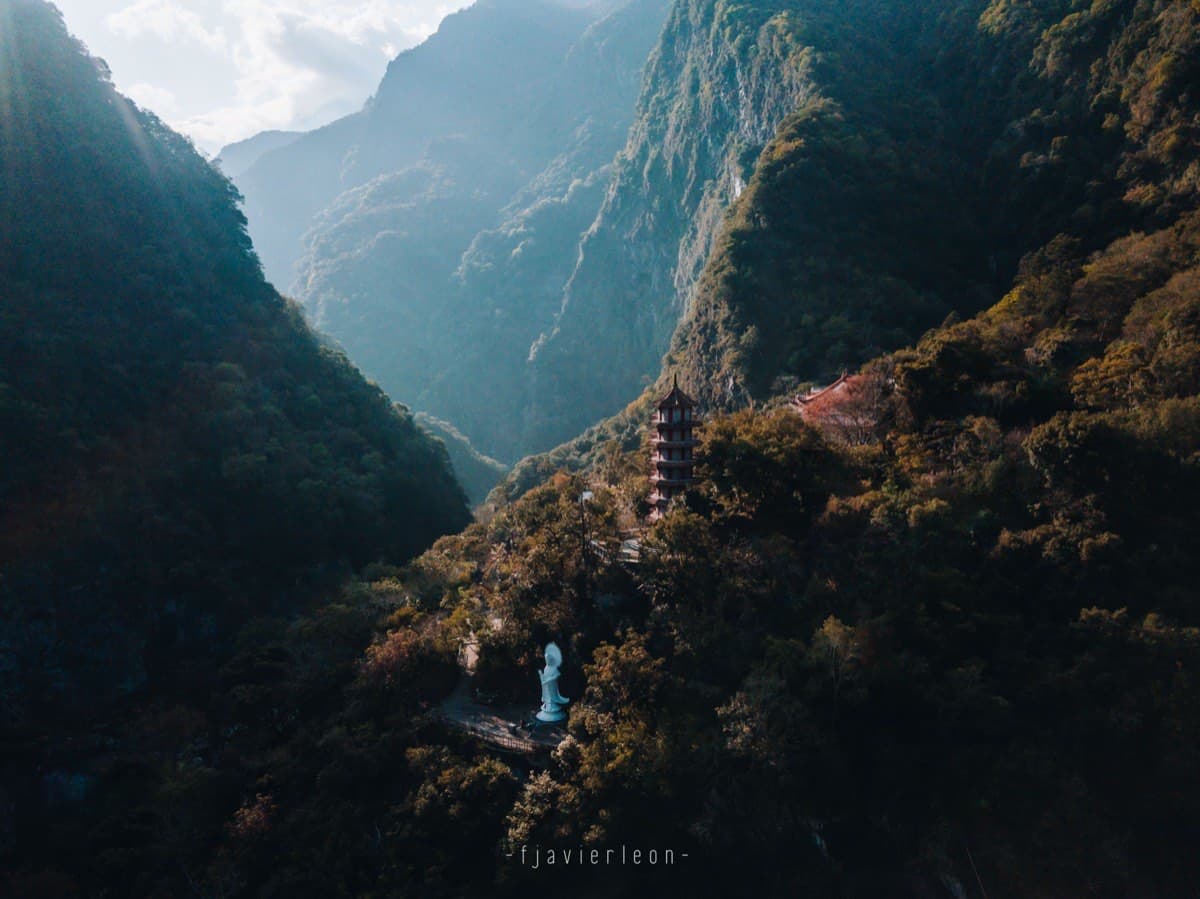
Spring (March-May) and autumn (October-November) are the best windows. The weather is predictable, the air is clear, and the temperatures are comfortable for riding. Morning mist sometimes settles in the gorge at dawn, which is beautiful but burns off quickly once the sun gets above the walls.
Summer (June-August) is best avoided. Typhoon season brings heavy rain, and heavy rain in a marble gorge means rockfall risk. Sections of Highway 8 close periodically after storms, and the humidity at sea level in Hualien before you even reach the gorge is punishing.
Winter (December-February) is rideable but cold in the gorge, where the sun doesn’t reach the road until mid-morning. If you’re heading beyond Tianxiang into the mountains, temperatures drop significantly.
One weather note specific to the gorge: the marble walls create their own microclimate. Even on a warm day in Hualien, the gorge floor can be 5-8 degrees cooler. Bring a light layer.
Practical Tips for Cycling Taroko Gorge
Start early. Tourist buses leave Hualien from around 8am. If you’re on the road by 6:30 or 7am, you’ll have the gorge almost entirely to yourself for the first couple of hours. This is the single biggest difference between a good Taroko ride and a great one.
Carry enough water and food. The 7-Eleven at Tianxiang sells out of most useful items by mid-morning. Don’t plan your nutrition around it, carry what you need from Hualien. If you’re riding with our guided tours, the support vehicle handles all of this.
Lights and a helmet are essential. There are several short tunnels through the gorge, and some are poorly lit. A rear light is as important as a front one, you want drivers to see you in there.
Hualien is your base. The gorge entrance is about 25km north of Hualien city, which has excellent accommodation, food, and bike shops. Most riders start from Hualien, ride to Tianxiang, and either continue up towards the KOM or return the way they came. The ride back is faster, and the views are just as good in reverse.
Road conditions beyond Tianxiang. If you’re planning to continue past Tianxiang towards the KOM, be aware that there is ongoing construction at Bilu (around 40km into the climb) following a landslide. The affected section has timed road closures, which can leave unsupported riders stranded for hours. This is one of the strongest practical arguments for riding with vehicle support, our guides know the closure schedule and can adjust the day accordingly.
The gorge beyond Tianxiang. If the 20km gorge ride leaves you wanting more, the road continues climbing all the way to Wuling Pass at 3,275m, the full Taiwan KOM route. The gorge section is the opening stage of that much longer climb. Many riders come to Taiwan planning to ride only the gorge, then come back the following year to attempt the full KOM.
Beyond the Gorge: Hualien and the East Coast
Hualien is worth more than a night’s sleep before the gorge. The city sits at the northern end of Taiwan’s spectacular east coast, the East Rift Valley stretches south from here, and the Pacific coastline offers some of the quietest and most scenic cycling roads on the island.
The local food scene is excellent. Hualien is famous for its mochi (a Japanese legacy from the colonial period), and Dongdamen Night Market is one of the best on the island. After a day in the gorge, track down the French coffin, a savoury, deep-fried French toast that’s a Hualien speciality, and the local stinky tofu, which divides opinion but is worth trying at least once.
Frequently Asked Questions
Can you cycle through Taroko Gorge? Yes, and it’s one of the best ways to experience it. The 20km road from the gorge entrance to Tianxiang is open to cyclists and follows Highway 8 along the Liwu River. The gradients are gentle (averaging 2.5%), making it accessible to most fitness levels. You’ll see far more from a bike than from a tour bus window.
How long does it take to cycle through Taroko Gorge? The 20km ride from the gorge entrance to Tianxiang takes most cyclists 1.5 to 2.5 hours, depending on pace and how often you stop. And you will stop, Changchun Shrine, Swallow Grotto, and the gorge viewpoints are impossible to ride past without pausing.
Is cycling Taroko Gorge dangerous? The surface is good and the gradients are easy. Traffic is the thing to manage. Tour buses start rolling out of Hualien around 8am, and some sections of road are narrow. We aim to be past Swallow Grotto by 8:30am. Wear a helmet and run a rear light for the short tunnels.
When is the best time to cycle Taroko Gorge? Our peak cycling seasons run during spring and autumn. Summer is potentially ridable in the high mountains, but temperatures in summers start to get really hot. Particularly into late summer, during July and August, there’s a chance of typhoons hitting the island. Winter has really nice ridable conditions if you stick to the rural locations of the East Coast, but it can start to get very cold in the high mountain passes. If you want to attempt the KOM ride, Wuling Pass is at 3,270m, so you can even get problems with frost and ice up at the highest points of the road. Spring and autumn, though, are a really nice balance. Temperatures tend to be in the mid to high twenties. They’re generally drier than the summer but warmer than the winter, and so we tend to run almost all of our trips during this period.
Do I need a permit to cycle through Taroko Gorge? No permit is needed to cycle the main Highway 8 road through the gorge. Some hiking trails within Taroko National Park require permits (bookable online), but the cycling route itself is a public road open to all traffic.
Ready to ride through Taroko Gorge with full support and local guides who know every corner? Enquire about our 7-day King of the Mountains tour, the gorge is just the beginning. Or experience it as part of a complete island adventure on our 14-day Discover Taiwan tour. For the bigger picture, our guide to cycling in Taiwan lays out the regions and how Taroko fits among them.