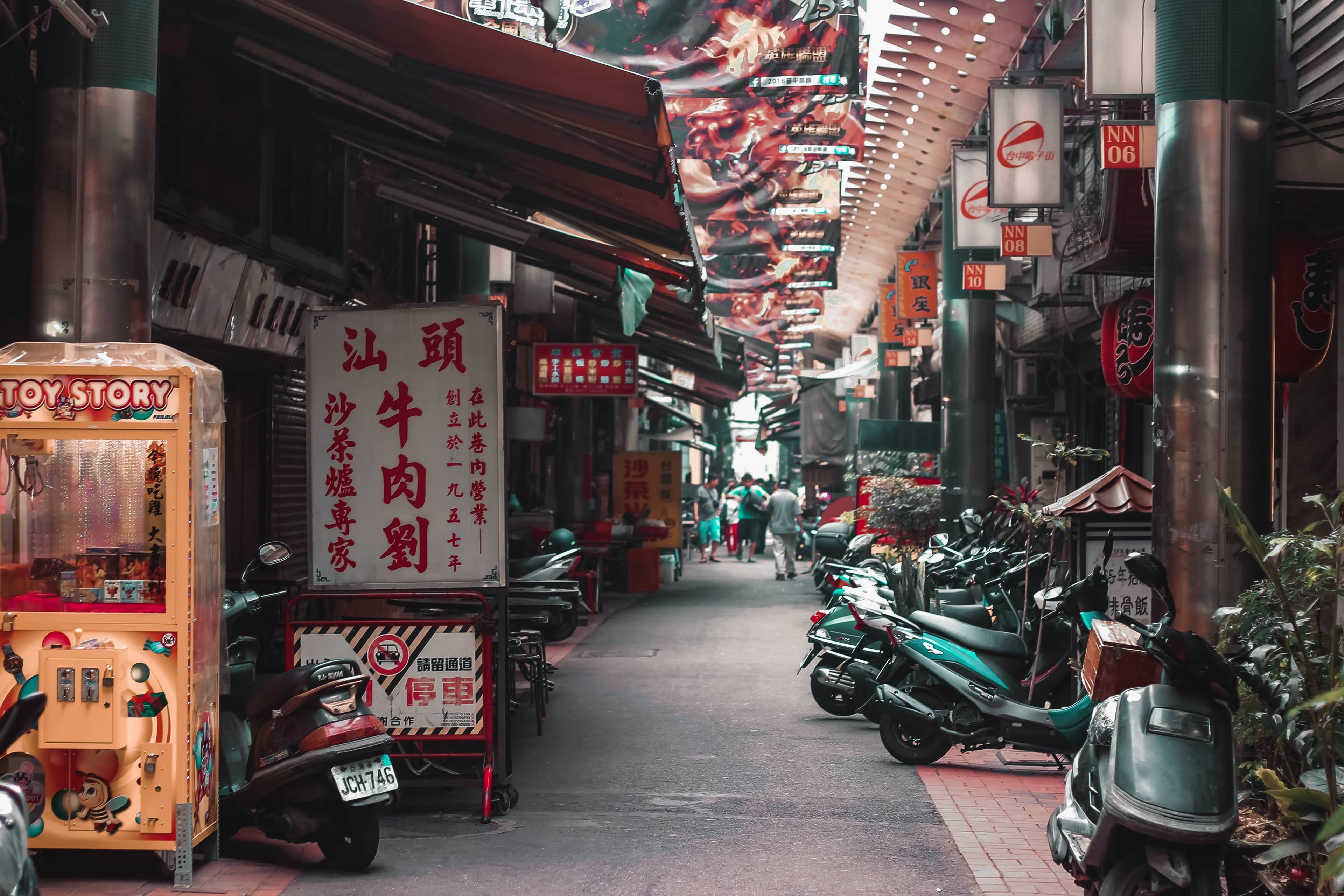
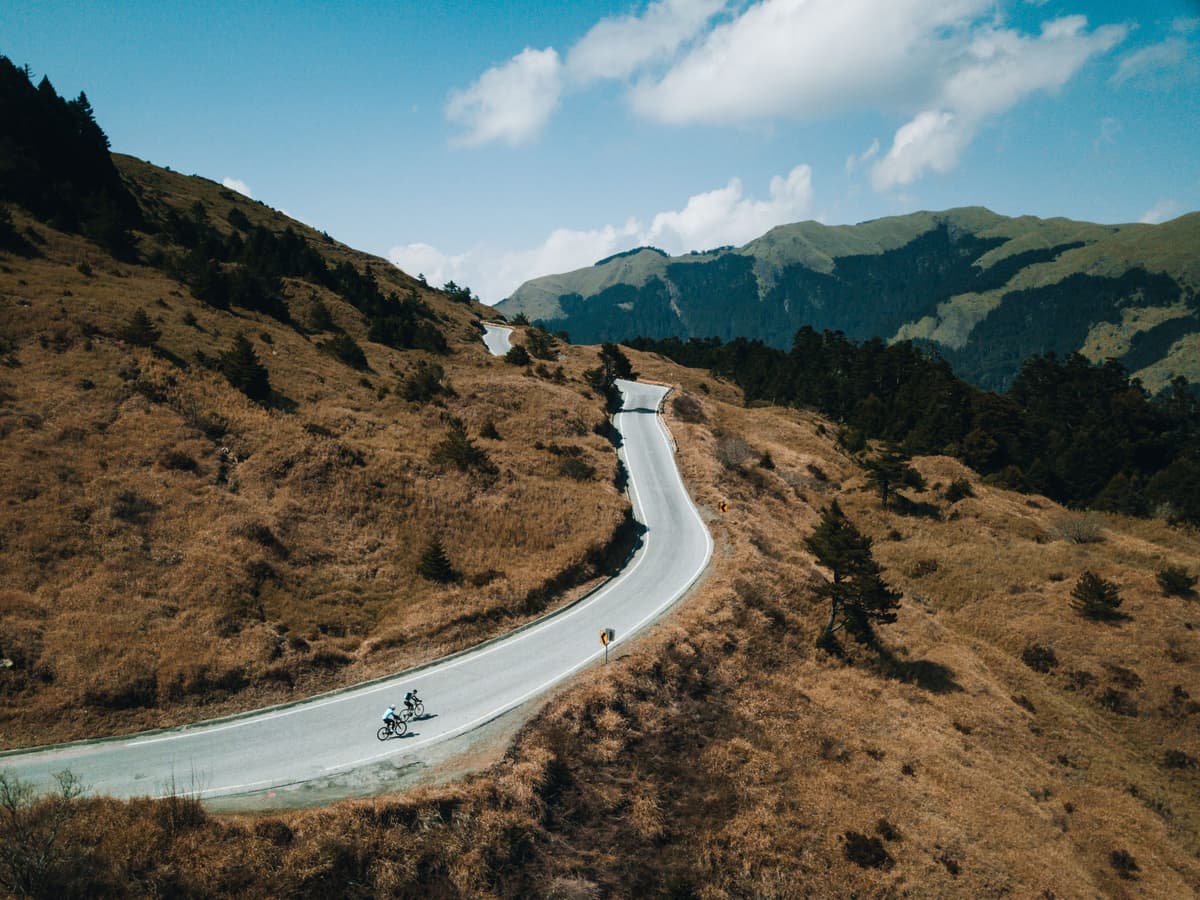
When you’re climbing the road to Wuling Pass, or riding along the Pacific coast south of Hualien, or eating breakfast in a morning market in a town most tourists have never heard of, you’re moving through a place with a lot of history in it. Most of it isn’t well known outside Taiwan. Most of it is worth knowing.
This is a brief history of Taiwan, not a textbook chapter, but enough to give you a feel for what shaped this island and why it feels the way it does.
Taiwan History at a Glance
Six thousand years of indigenous Austronesian settlement. Four centuries of contested sovereignty under Portuguese sightings, Dutch and Spanish forts, Ming loyalist holdouts, Qing administration, and Japanese colonial rule. Seven decades of post-war self-determination that turned the island into one of Asia’s most dynamic democracies. Here’s the short version, before we get to the longer one.
The First People
Taiwan’s indigenous peoples have been here for at least 6,000 years. Sixteen groups are officially recognised today, speaking distinct languages in the Austronesian family, the same language family that spread across the Pacific to become Hawaiian, Maori, Tagalog, and Malay. Linguists believe Taiwan was the origin point for this entire migration. The people who paddled out to populate the Pacific started here.
The indigenous communities lived primarily on the east coast and in the central mountains, the same areas that are the most dramatic and least-visited parts of Taiwan today. If you’re cycling the east coast or climbing towards Wuling, you’re in territory that has been continuously inhabited for a very long time.
The European Arrivals: Portuguese, Dutch, and Spanish
In 1544, a Portuguese ship sailing north along Taiwan’s western coast spotted the forested mountains rising above the sea and noted in the ship’s log: Ilha Formosa, Beautiful Island. The name stuck in Western writing for four centuries.
The Portuguese didn’t stop. They had no strategic interest in Taiwan; they were focused on established trade routes further south. But they gave the world a name for this island that persisted long after their empire had faded.
The Dutch East India Company, the VOC, one of the world’s first multinational corporations, established a colony on Taiwan’s southwest coast in 1624. They built Fort Zeelandia near what is now Tainan, and used Taiwan as a trading hub between Japan, China, and the rest of Southeast Asia.
The Spanish, not to be outdone, arrived in the north in 1626 and built their own fort at Tamsui, a harbour town on the northwest coast that is now a popular day trip from Taipei and a quiet pleasure to cycle through. In 1642 the Dutch pushed the Spanish out of Tamsui, and from then on they ran the island on their own.
To work the land, the Dutch shipped in Han Chinese labourers from the mainland to grow sugar and rice. That was the start of the demographic shift that shapes Taiwan to this day. Dutch rule lasted nearly forty years.
From Koxinga to the Qing Dynasty
In 1662, a Ming dynasty loyalist general named Zheng Chenggong, known in the West as Koxinga, sailed from the mainland with 25,000 soldiers and expelled the Dutch after a nine-month siege of Fort Zeelandia. Koxinga was the son of a Chinese trader and a Japanese mother, and he had spent years fighting the Qing dynasty that had overthrown the Ming on the mainland. Taiwan became his base.
He died just months after the victory, aged 37. His son continued ruling Taiwan as a Ming loyalist kingdom for another two decades until the Qing dynasty finally brought the island under their control in 1683.
Koxinga is a significant figure in Taiwanese memory, his statue stands in many temples, and he’s claimed by various parties across the Taiwan Strait as a national hero for different and sometimes contradictory reasons.
The Qing weren’t especially interested in Taiwan. One official famously described it as “a ball of mud beyond the seas”, not worth fighting over and difficult to govern. They ruled the western plains while the mountains remained effectively under indigenous control.
Han Chinese settlement grew steadily through the 18th century, particularly in the fertile western plains. The island developed a distinct culture that was neither quite mainland Chinese nor quite anything else, a mix of Fujianese, Hakka, indigenous, and local influences that persists today in the food, the temples, and the way people speak. Tainan, the old Dutch and Ming capital, is still the easiest place on the island to taste that layering, our 16-day Full Island Tour spends a day eating its way through the old quarter.
Taiwan became a full Qing province in 1885, and then, just ten years later, it was ceded to Japan.
The Japanese Build the Roads You’re Riding
In 1895, China lost the First Sino-Japanese War and signed the Treaty of Shimonoseki, ceding Taiwan to Japan. The Japanese ruled for fifty years, until 1945.
The colonial period was brutal in some respects and transformative in others. Japan suppressed indigenous resistance with military force. It also built Taiwan’s railways, its road network, its irrigation systems, its schools, and its public health infrastructure, investments that laid the foundation for Taiwan’s later economic development.
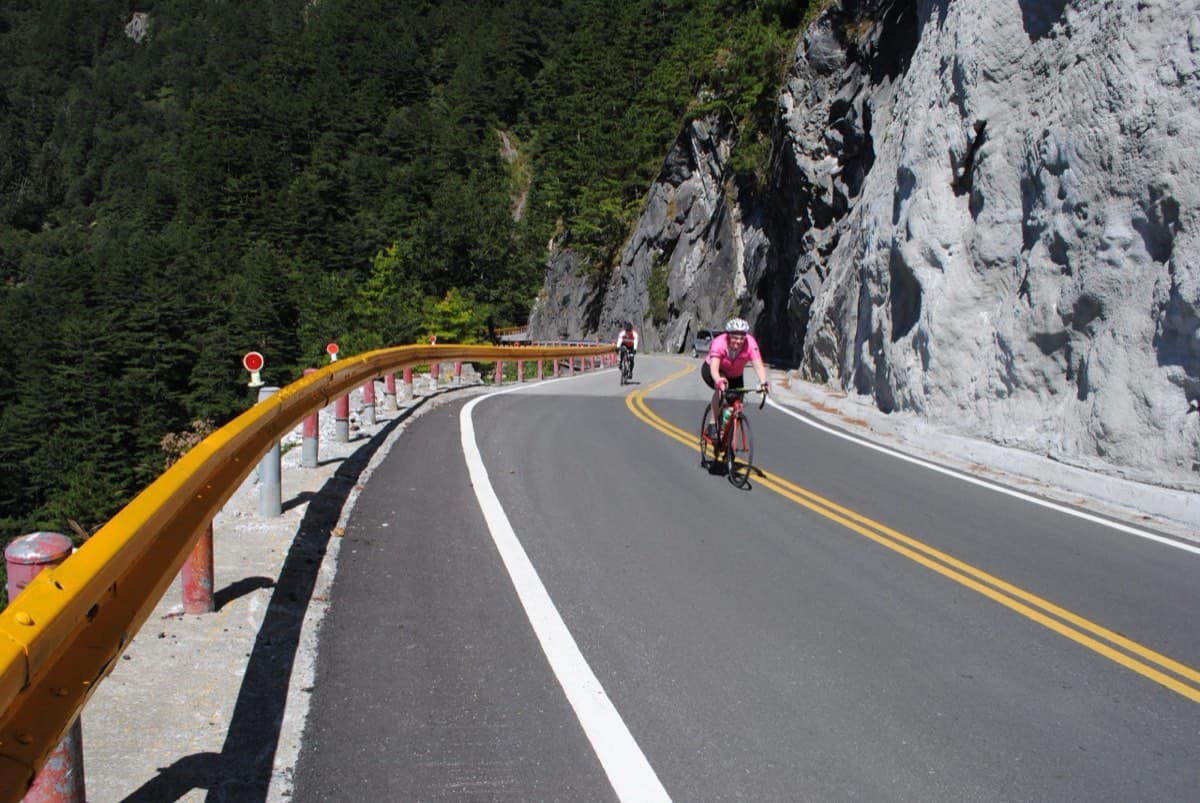
The road to Wuling Pass at the top of the Taiwan KOM, the 87.5km climb from the coast to 3,275 metres, was built by Japanese engineers, initially for forestry and resource extraction. The same is true of many of the mountain roads that make Taiwan such an extraordinary cycling destination. When you’re climbing above Tianxiang through the cloud forest, you’re on a road that was hacked out of the mountainside by colonial-era labour a century ago. (If you’re planning to attempt it, our complete guide to cycling the Taiwan KOM covers every section of the climb.)
Japan also brought modern agricultural science to Taiwan, in particular, the development of high-yield rice strains that made the island one of Asia’s most productive farming territories. The bento culture that persists in Taiwan’s railway stations and convenience stores is a direct Japanese inheritance.
From 1945 to Modern Taiwan
Japan surrendered in 1945. Taiwan was handed to the Republic of China government, the nationalist government led by Chiang Kai-shek that had been fighting both Japan and the Communist Party on the mainland.
Four years later, the Communists won the Chinese Civil War. The ROC government, along with approximately 1.2 million mainland Chinese soldiers, officials, and their families, fled to Taiwan. Chiang Kai-shek declared Taipei the temporary capital of the Republic of China, pending recapture of the mainland. That recapture never happened.
The period immediately after 1949 was difficult. The incoming mainlanders imposed martial law, and a massacre of local Taiwanese by ROC troops in February 1947, the 228 Incident, left a deep scar on Taiwanese society that took decades to openly discuss. Martial law lasted until 1987.
This history explains something that first-time visitors sometimes find puzzling about Taiwan’s identity. The island was ruled for five decades by a government that insisted it was the legitimate government of all China. Many of the older generation of mainlanders held on to that belief for their entire lives. Their children and grandchildren, born in Taiwan, raised in Taiwan, began to see things differently. The tension between those two perspectives played out through the second half of the twentieth century and continues to shape politics today.
From the 1960s onward, Taiwan underwent one of the most rapid economic transformations in history, the Taiwan Miracle. An agrarian island with minimal natural resources became a global manufacturing and technology powerhouse. Taiwan now produces a significant share of the world’s advanced semiconductors, TSMC, based outside Taichung, manufactures chips used in virtually every smartphone and laptop on earth. Per-capita income is now comparable to Western Europe.
Democracy came in stages. Chiang Kai-shek died in 1975. His son Chiang Ching-kuo lifted martial law in 1987, 38 years after it was imposed. Lee Teng-hui, born in Taiwan, became the first president elected by direct popular vote in 1996. The transition to democracy was peaceful and, in retrospect, remarkably swift.
Taiwanese identity, distinct from Chinese identity, has grown stronger with each generation. In surveys taken over the past decade, well over 60% of Taiwan’s people identify primarily as Taiwanese rather than Chinese or both. The island’s LGBTQ rights are the most progressive in Asia. Its response to COVID-19 was one of the most effective in the world. It has built its own democracy, its own culture, and its own international identity, while remaining technically in a state of unresolved dispute with its largest neighbour.
It is, as the Portuguese noticed five hundred years ago, a remarkable island.
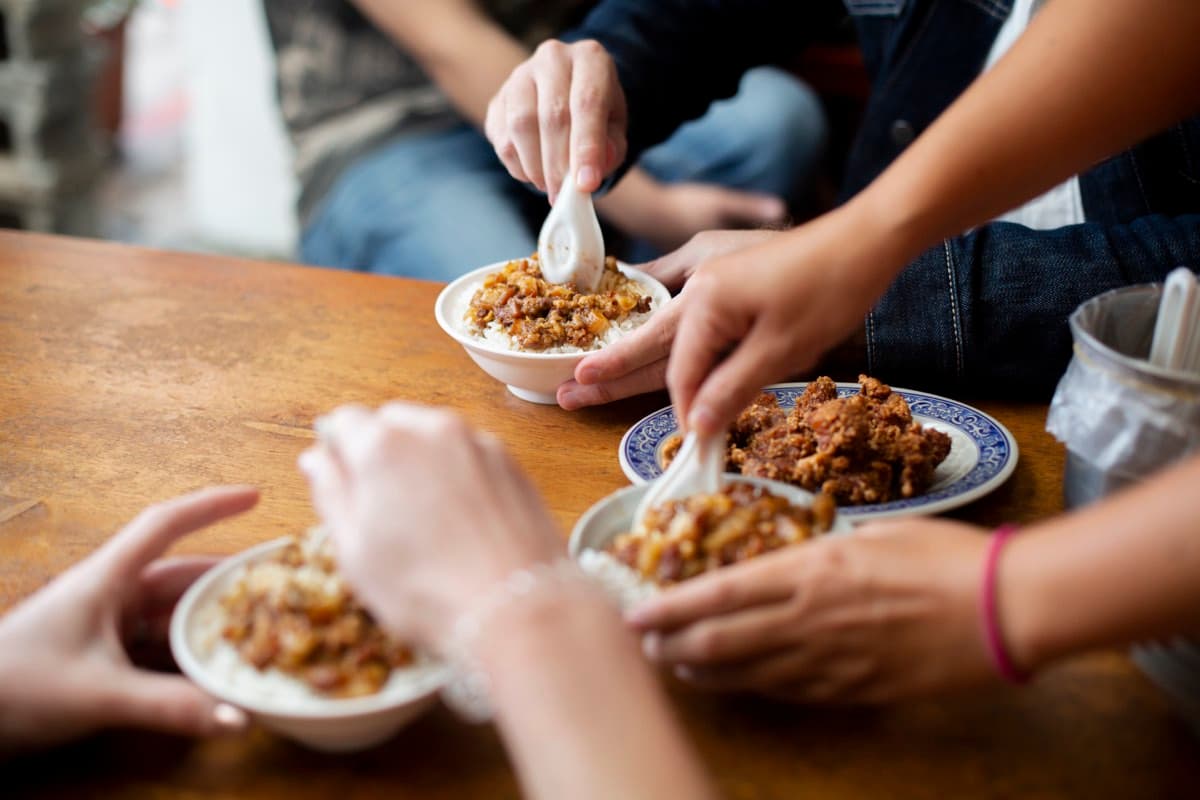
The food tells the whole story in miniature. A meal in Taiwan might include indigenous wild boar sausage, Japanese-style sashimi, Fujianese braised pork rice, Hakka stir-fried rice cake, and a bubble tea invented in Tainan in the 1980s. The island absorbed every wave of settlers and colonisers and made something entirely its own out of all of it.
That’s the island you’re cycling. Six thousand years of continuous settlement, four centuries of contested sovereignty, fifty years of Japanese infrastructure, and a democratic society that has quietly become one of the most interesting places in Asia. If you’re wondering why Taiwan in particular is such a compelling destination for cyclists, we’ve written about that too, and our complete guide to cycling in Taiwan covers the practical planning side.
It helps to know this when you’re riding through it.
Frequently Asked Questions
Did the Portuguese colonise Taiwan? No. Portuguese sailors sighted Taiwan in 1544 and named it Ilha Formosa, ‘Beautiful Island’, but never established a colony. They had no strategic interest in settling there; the island was simply noted in ships’ logs as they sailed past. It was the Dutch, arriving in 1624, who built the first European colonial settlement.
Why is Taiwan called Formosa? Formosa comes from the Portuguese ‘Ilha Formosa’, meaning Beautiful Island. Portuguese sailors used this name when they first sighted Taiwan’s forested mountains from the sea in 1544. The name was widely used in Western writing through the 19th and early 20th centuries, you’ll still find it on historical maps and in old travel writing.
Was Taiwan a Japanese colony? Yes. Japan ruled Taiwan from 1895 to 1945 following the First Sino-Japanese War, when Qing China ceded the island under the Treaty of Shimonoseki. Japan invested heavily in Taiwan’s infrastructure, building roads, railways, irrigation systems, and schools. The mountain road to Wuling Pass at the top of the Taiwan KOM was built during this period.
What is Taiwan’s relationship with China? It’s complicated, deliberately so. Taiwan is governed by the Republic of China (ROC), a government that fled the mainland in 1949 after losing the Chinese Civil War to the Communist Party. Taiwan operates as an independent democracy with its own government, military, and currency, but its formal status remains contested. Most Taiwanese identify primarily as Taiwanese rather than Chinese.
Who are the indigenous people of Taiwan? Taiwan has 16 officially recognised indigenous peoples, collectively descended from Austronesian-speaking communities that have lived on the island for at least 6,000 years. These same peoples are the ancestors of the Polynesian, Micronesian, and Malay peoples who settled across the Pacific and Indian Oceans. You’ll encounter indigenous culture most visibly on the east coast and in the central mountains, both areas that feature prominently on our cycling routes.
Want to explore Taiwan properly, not just the roads but the culture, the food, and the history behind everything you see? Our 16-day Full Island Tour takes you around the entire island with guides who know it deeply. Or if you want a taste first, the 14-day Discover Taiwan tour covers the highlights from north to south. Enquire about either tour here.