
Cycling around Taiwan is the rite-of-passage ride for anyone serious about bikes and this country. Locals call it the quan dao (literally “complete island”) and it’s the trip that every Taiwanese rider dreams of completing at least once. A loop of the whole island, from Taipei back to Taipei, taking in the Pacific east coast, the central mountain range, Taroko Gorge, and the Taiwan KOM. It’s the single best way to see how much cycling range Taiwan actually has, and the honest answer to anyone asking whether Taiwan is worth a bike trip is that they should come and do the quan dao.
This guide covers what the route actually is, how long it takes, which direction to ride, where the loop gets genuinely hard, and the 150km of it we’d strongly advise you skip. Written from the saddle, not from a search-engine template.
What Quan Dao Means and Why It Matters
Quan dao is Mandarin for “complete island.” In cycling circles in Taiwan it’s shorthand for a full circumnavigation of the island by bike, and it’s one of the country’s unofficial national achievements. Giant (the Taiwanese bike manufacturer) runs organised quan dao trips every year. The Taiwan Tourism Bureau signposts its own version of the loop, Cycling Route 1, around the coast. Local riders talk about it the way a British cyclist might talk about Land’s End to John o’ Groats, or an American about the Pacific Coast Highway.
The appeal isn’t really about proving you can do a long distance. It’s that Taiwan packs an enormous amount of riding variety into a small island. In the course of one loop you’ll ride through a dense tropical city, along Pacific sea cliffs, over a 3,275m mountain pass, through the marble walls of Taroko Gorge, and past rice paddies in the Rift Valley. There’s very little else in Asia where one continuous ride takes you through that much landscape.
The Route: Anti-Clockwise, and 1,287km Long
The standard direction to ride the quan dao is anti-clockwise. That is, south out of Taipei down the west side, then east across the south of the island through Kenting National Park, then north up the Pacific east coast, then west back to Taipei through Taroko Gorge and the KOM.
The reason is wind. Through the spring and autumn cycling seasons the prevailing wind on the east coast is southerly. Ride anti-clockwise and you have that wind at your back for the long Pacific section, which is already the part of the loop with the biggest daily distances. Ride clockwise and you’ll be grinding into it for three or four days straight. We’ve had plenty of riders try the clockwise version over the years and none of them have gone home raving about it.
There’s one other reason for the direction. The climb up to Wuling Pass from the Hualien side (the classic Taiwan KOM route) is the crescendo of the whole trip. It makes sense to ride it with everything else in the legs and in the memory, not as a jetlagged opener in week one.
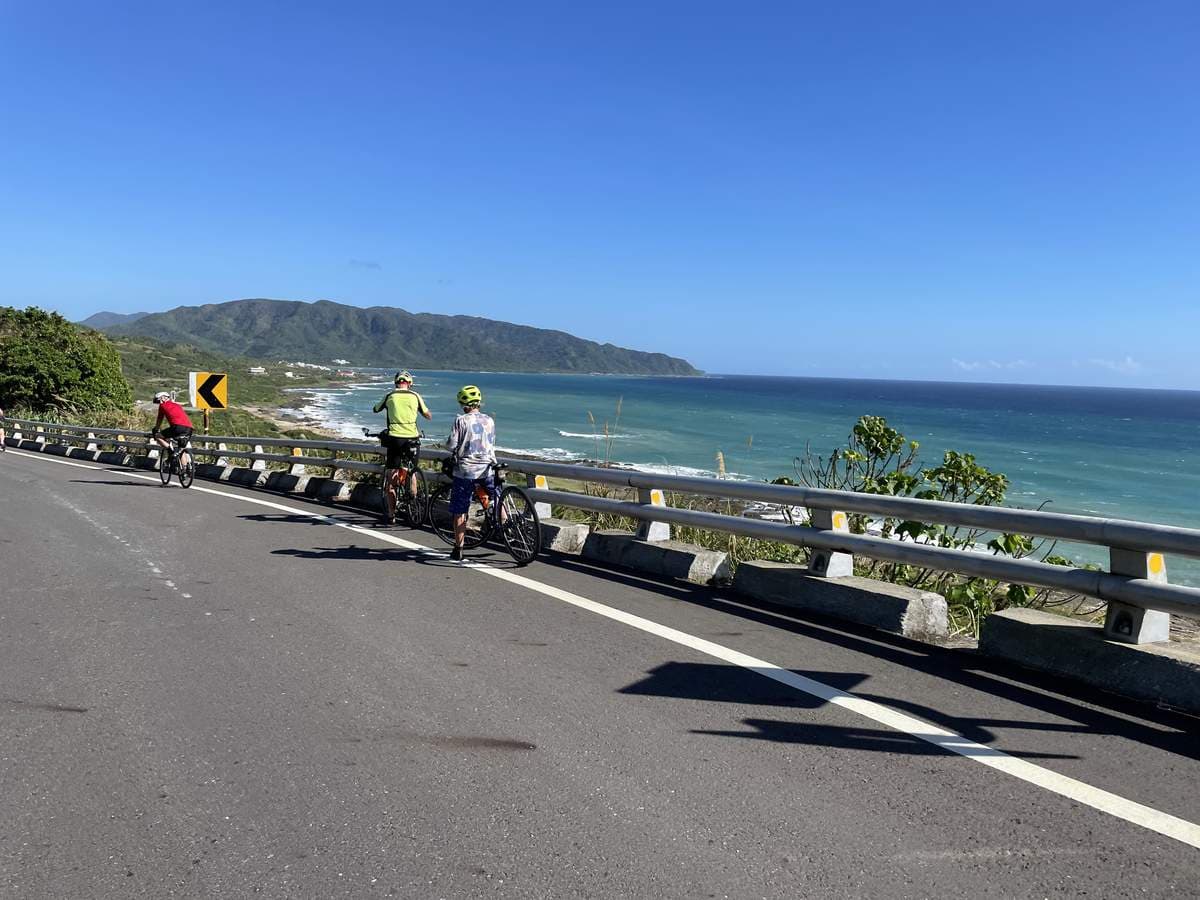
The full quan dao, ridden the way we do it, is 1,287km with 21,558m of climbing, over 16 days. That’s the route we run on our 16-Day Full Island Tour and it’s what the numbers come out at when you ride the loop properly: inland through Sun Moon Lake rather than down Cycling Route 1 on the west coast, over to Taroko via the central range, and up the KOM as the centrepiece.
You can loop around the island in less time than that. Fit riders happy with 120km-plus days can compress it into 10 or 12, usually by skipping the inland west-coast section, cutting rest days, and dropping the Yilan Valley approach to Taipei. Every one of those shortcuts trades a day off the trip for the part of Taiwan that made people want to come here in the first place. If you only have a week or two and can’t give it 16 days, a shorter tour that concentrates on the east coast and the KOM (rather than a faster, lower-quality loop) is almost always the better trade.
The total 21,558m of elevation is spread across three big climbing days in particular: Sun Moon Lake over the western mountains to Chiayi, the KOM itself from Taroko, and the northern approach from the Yilan Valley back to Taipei. Rider fitness on a tour like this isn’t really about peak power; it’s about being able to ride 80 to 120km every day for a fortnight, with three days of serious mountain climbing thrown in.
The Big Question: Cycling Route 1 or Inland?
This is the single most important routing decision on the whole trip, and most people get it wrong because they follow the signs.
Cycling Route 1 is the official Taiwan Tourism Bureau loop, signposted in blue and green around the entire island. On the east coast it’s mostly fine. On the west coast, especially the stretch from Hsinchu down through Tainan to Kaohsiung, it’s not. CR1 on the west coast runs on or next to fast, heavily trafficked main roads through an industrial belt with poor air quality, in what is usually the hottest part of the lowlands. People ride it. We don’t, and we don’t recommend it.
The alternative is to go inland. From Taipei you can ride down through the foothills past Sun Moon Lake and Alishan, avoiding the coastal industrial zone entirely. It adds distance and climbing, but the riding is a different league: quiet mountain roads, tea plantations, traditional villages, genuinely good air. If you want to do the quan dao and are debating the route through the west of the island, take the inland route. Every single time. Our full-island itineraries are built around the inland west-coast route, not CR1.
There’s one exception worth flagging. Tainan, the old capital, is absolutely worth visiting for the history, the Confucian temple, and the food. If you want to fold a stop into Tainan, the way to do it is to cut across from the western foothills at Yujing rather than riding CR1 north-south through it.
The Hard Bits
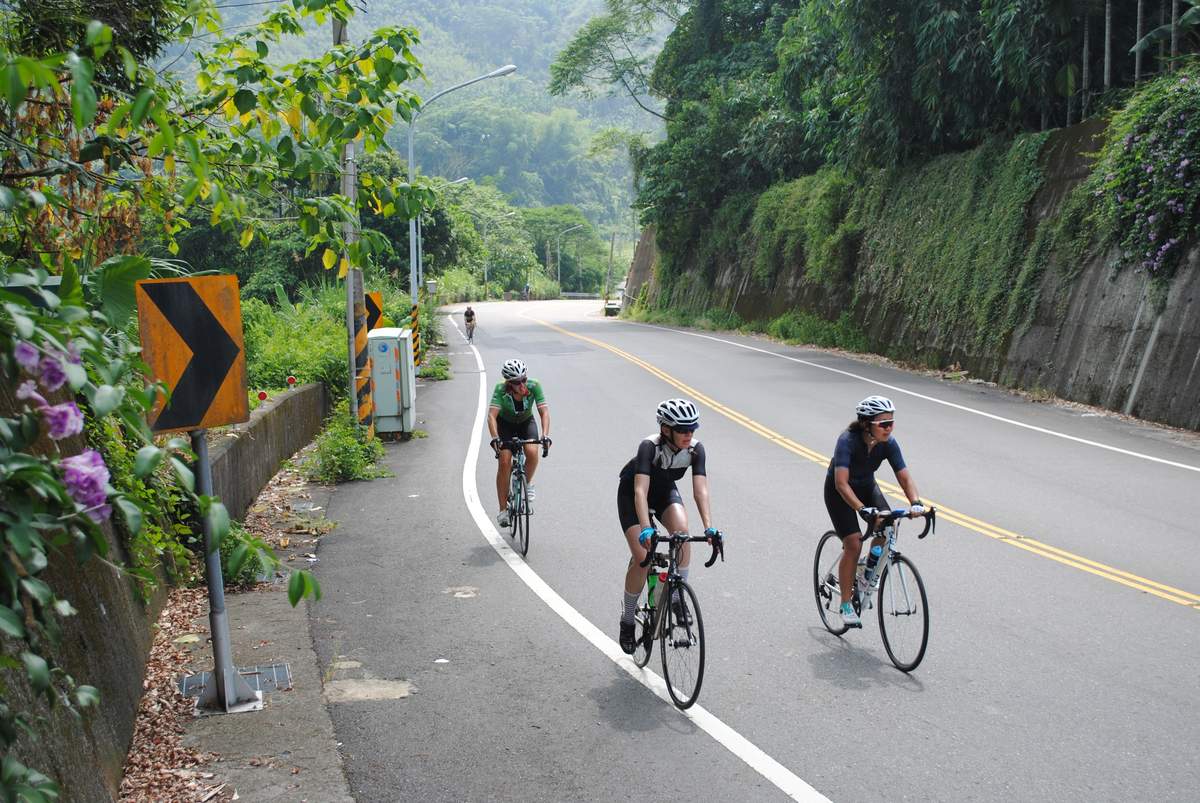
Three sections of the quan dao are meaningfully tougher than the rest.
Kenting National Park to Zhiben Hot Springs. The ride up through Kenting National Park has plenty of elevation and some of the most striking scenery on the whole loop. The catch is accommodation. The obvious stopping place would be Daren, just as you leave the park, but there are no options there. The closest place to stay is the aboriginal village at Taimali, and it’s usually worth pushing on an extra 15km to Zhiben Hot Springs to enjoy the incredible springs at the end of the day. Self-supported, that turns it into a 140km ride if you aren’t putting the bike in the car for the final 35km out of the national park.
The Taiwan KOM itself. Taroko to Wuling. 87.5km of continuous climbing to 3,275m, making it the world’s longest paved road climb, and the centrepiece of our 7-Day King of the Mountains tour as a standalone trip. The first 20km through Taroko Gorge averages 2.5% and is largely enjoyable. The middle 57.5km up through Bilu and Dayuling is a more conventional 4-5% climb through cloud forest. The final 10km from Dayuling to the summit is the kicker: switchbacks with ramps of 15-18%, exposed alpine terrain, and the altitude biting by the time you’re above 3,000m. Five kilometres before Dayuling there’s a petrol station selling the best zongzi (rice dumplings) on the island. People drive up to the mountain just to buy these zongzi. Stop for one.
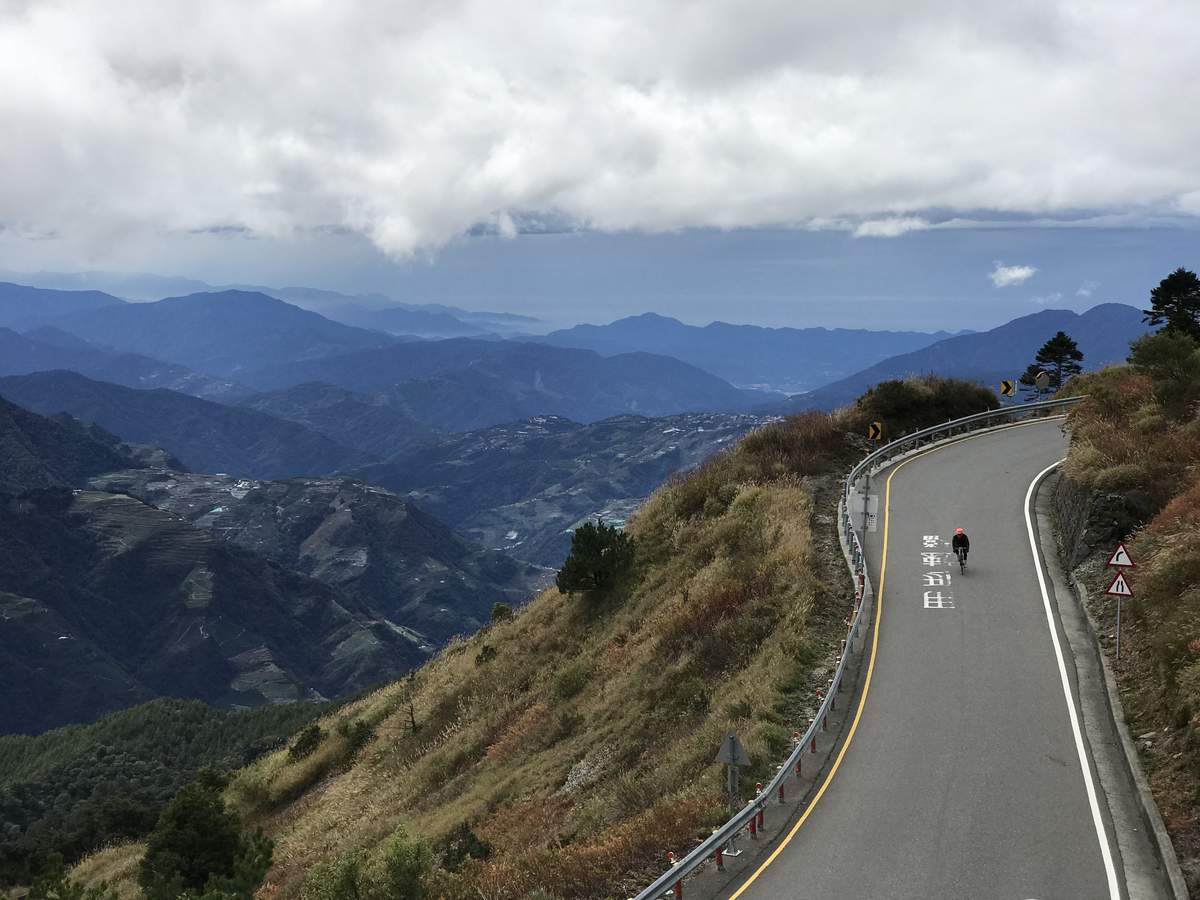
The Old Yilan-Taipei Road climb. If your route brings you back to Taipei over the old Yilan-Taipei mountain road (as most of ours do) you’ve got another solid climb on tired legs. The old highway was superseded by a 10km tunnel for cars a few years back, which means cyclists now get a well-surfaced mountain road with almost no traffic on it. It’s one of the best climbs in northern Taiwan, and nothing to do with the KOM route further south.
Why Supported Beats Self-Guided for the Quan Dao
We’ve written a longer piece on this, but the specifics for the quan dao are worth calling out.
The accommodation situation around Wuling Pass is the first problem. Songsuye Lodge, the only place to stay near the summit, opens bookings at exactly 8am Taiwan time one month in advance and fills within minutes. Foreigners who successfully book have occasionally had their rooms resold on arrival. The alternatives are to descend 35km to Qingjing (which means reclimbing the next day) or 50km to Lishan over a landslide-prone road that’s genuinely dangerous in poor light. We drive our groups from the summit to Lishan for a reason.
The second problem is luggage. On a supported tour you ride the KOM with jersey pockets. Self-supported, you’re riding it with panniers on the back of the bike, which turns an already brutal climb into something most people can’t realistically finish.
The third problem is the rest of the stuff that makes the loop special: the mingsu (family-run B&Bs) on the east coast that don’t take online bookings, the Ruisui restaurant we’ve been taking riders to for years, the swordfish sashimi at Chenggong, the unsigned country roads through the Rift Valley that replace the official CR1 route. Very little of that is accessible to someone arriving cold with a GPX file.
Frequently Asked Questions
How many days does it take to cycle around Taiwan? The full quan dao is 1,287km with 21,558m of climbing, which works out to 16 days at a pace that gives you time to enjoy the ride rather than just survive it. You can do it faster by skipping the inland mountain sections and riding the coastal route, but you’ll miss most of what makes Taiwan worth the trip. Our Full Island Tour runs to 16 days for exactly that reason.
Should I cycle around Taiwan clockwise or anti-clockwise? Anti-clockwise. The prevailing winds along the east coast are southerly through the best cycling seasons, so riding south-to-north on that stretch means a tailwind on the days that would otherwise be the hardest. Clockwise is doable but you’ll spend three or four days grinding into a headwind along the Pacific, which tends to be the memory most people come home with.
How hard is it to cycle around Taiwan? Genuinely hard. The full quan dao is 1,287km with 21,558m of climbing, and it includes at least two serious mountain days: Taroko Gorge up to Wuling Pass (3,275m, 87.5km of continuous climbing) and Sun Moon Lake over the western mountains to Chiayi. Realistically you need to be comfortable riding 100km in the hills and putting that back-to-back for multiple days. Day-tripper fitness won’t cover it.
Can I cycle around Taiwan unsupported? Possible but a lot harder than it sounds. The problems are accommodation in the high mountains (Songsuye Lodge near Wuling is a booking lottery and foreigners have been turned away at the door), luggage weight on the KOM climb, and finding help if you have a mechanical east of the central range. People do it, but if you only have one shot at Taiwan, supported is the better call.
When is the best time to cycle around Taiwan? Spring (February to May) and autumn (September to November) are the two windows. Summer brings typhoons, extreme heat, and air-quality issues. Winter is fine in the south but the high passes near Wuling can touch freezing. October and November in particular tend to give the clearest skies and the most reliable tailwind on the east coast. For a fuller breakdown see our guide to the best time to cycle in Taiwan.
Ready to ride around Taiwan with full support? Luggage carried, mechanicals handled, accommodation locked in, and a guide who knows which petrol station sells the best zongzi after 70km of climbing. Enquire about our 16-Day Full Island Tour. For everything else you’ll want to know before booking, see our complete guide to cycling in Taiwan.