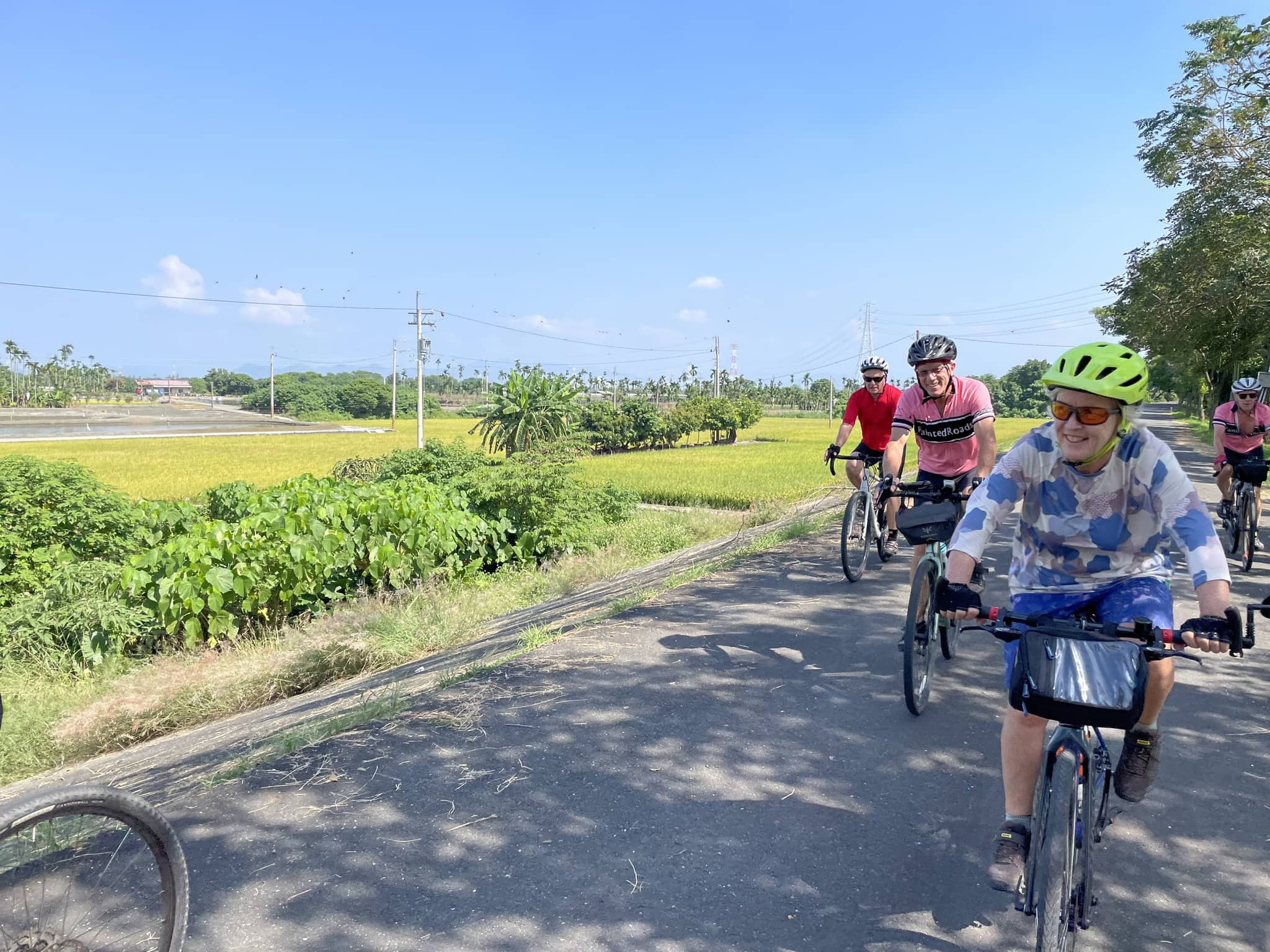
Cycling Taiwan with an e-bike is one of the most common requests we get, and the question underneath it is always some version of the same one. “Am I fit enough?” Sometimes that’s how it’s phrased. More often it turns up as “my partner isn’t a serious cyclist, would she still enjoy it?” or “I haven’t been training for the KOM, am I going to be holding everyone up?” For a lot of riders, an e-bike is the cleanest answer.
Taiwan is small, mountainous, and the home of Giant and Merida. Most of the cycling roads worth riding here are in the hills, where the legs decide if you’re having a holiday or a slog. This is the honest read on the e-bike option for a Taiwan cycling trip, from an operator who puts them on every tour.
Why an E-Bike Makes Sense in Taiwan
Most cycling destinations have one signature challenge and a lot of supporting flat. Taiwan is the opposite. The riding most visitors come for is in the mountains, and the mountains are unforgiving. The Taiwan KOM goes from sea level to 3,275 metres in a single 87.5-kilometre climb. The approach to Wuling Pass from the north is a two-day grind with nearly 5,000 metres of total ascent. Sun Moon Lake to the summit is another 3,500 metres up over 85 kilometres. Even the gentler routes through Taroko Gorge have a habit of ramping when you least expect it.
That terrain produces a particular kind of fitness anxiety in riders who would otherwise love Taiwan. Strong club cyclists worry about the KOM. Their partners worry about the days that flank it. Mixed-ability groups worry about whether the trip will end up being two trips, the fast riders waiting in cafes while the slower riders chase. An e-bike answers all three concerns with the same hardware.
The other thing that makes Taiwan an e-bike-friendly destination is industrial. Giant and Merida are both based here. The country is the world’s biggest manufacturer of bicycles by volume and the centre of gravity for high-end e-bike production. The bikes we rent are built locally and serviced by mechanics who work on them every week.
Where E-Bikes Genuinely Change the Trip
There are three trip patterns where an e-bike is not just useful but transformative.
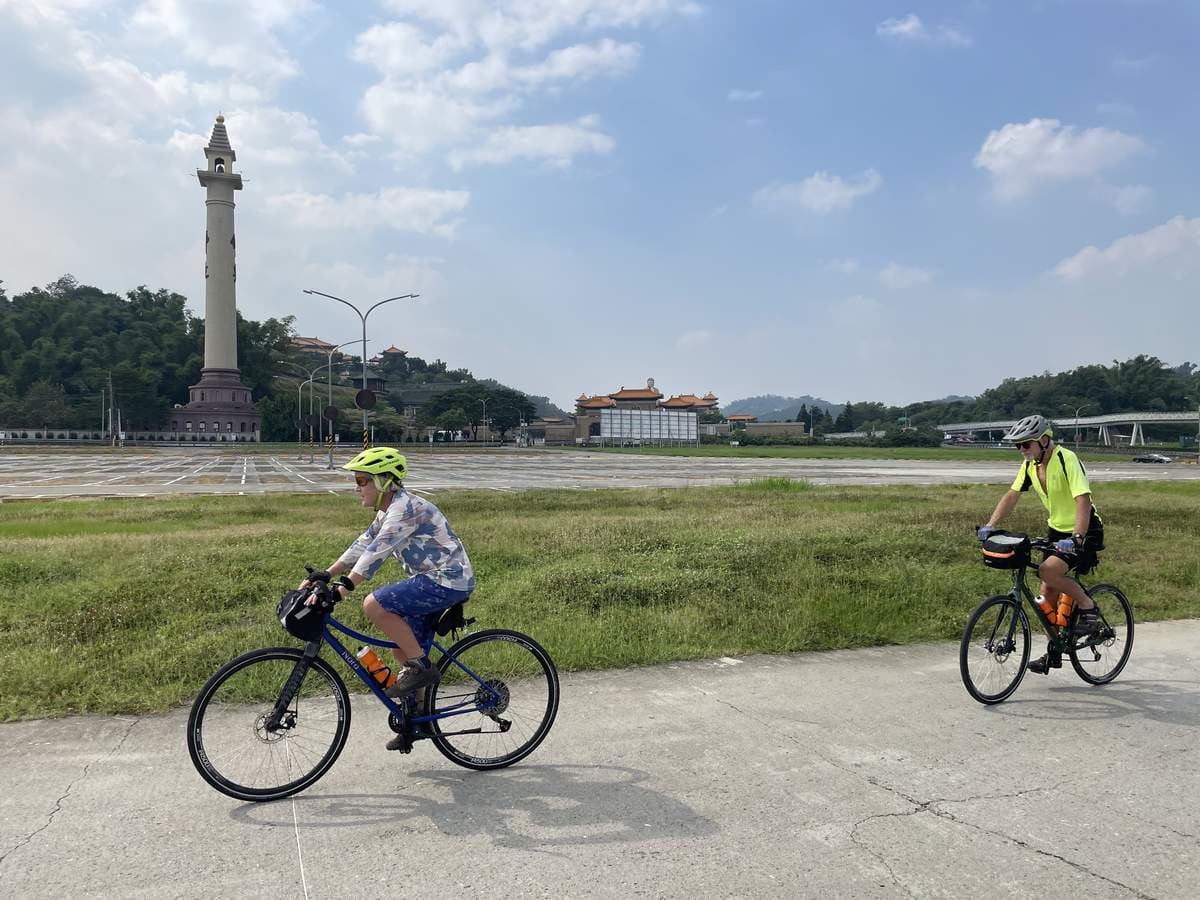
Mixed-ability couples and groups. This is the single most common reason riders ask us about e-bikes. One half of a couple rides three times a week and dreams of the KOM; the other rides once a fortnight in the summer and is along for the scenery. On a standard bike that is two different holidays. On an e-bike, the fitness gap closes on the climbs and disappears entirely on the long days. The slower rider keeps up, the faster rider does not have to sit on the brakes, and the group eats dinner together instead of arriving in waves.
The KOM as a bucket-list ride for riders short on training. The KOM rewards specific climbing fitness, and not everyone who wants to do it has 12 weeks to train. An e-bike brings the summit inside reach for riders who would otherwise step into the van by Dayuling. The bike still asks something of you on the final 10 kilometres of 15 to 18 percent gradients, but it asks something you can give.
Recovery days inside a long tour. On the 14-day and 16-day tours, even strong riders will have a low day. An e-bike for a day is one of the cleanest ways to keep someone on the bike rather than in the van. We have done it both directions: clients on standard bikes who swap to an e-bike for one ride to nurse a tweak, and clients on e-bikes who do a flat day on a standard bike for the legs.
What we tell riders to ignore is the snobbery. The idea that an e-bike is somehow a lesser ride does not survive ten minutes on Taiwan’s mountain roads. The view from Wuling Pass is the same view either way.
What an E-Bike Tour Looks Like Day-to-Day
The practical experience of an e-bike on a Pedal Taiwan trip is built around the support vehicle that follows the group every day.
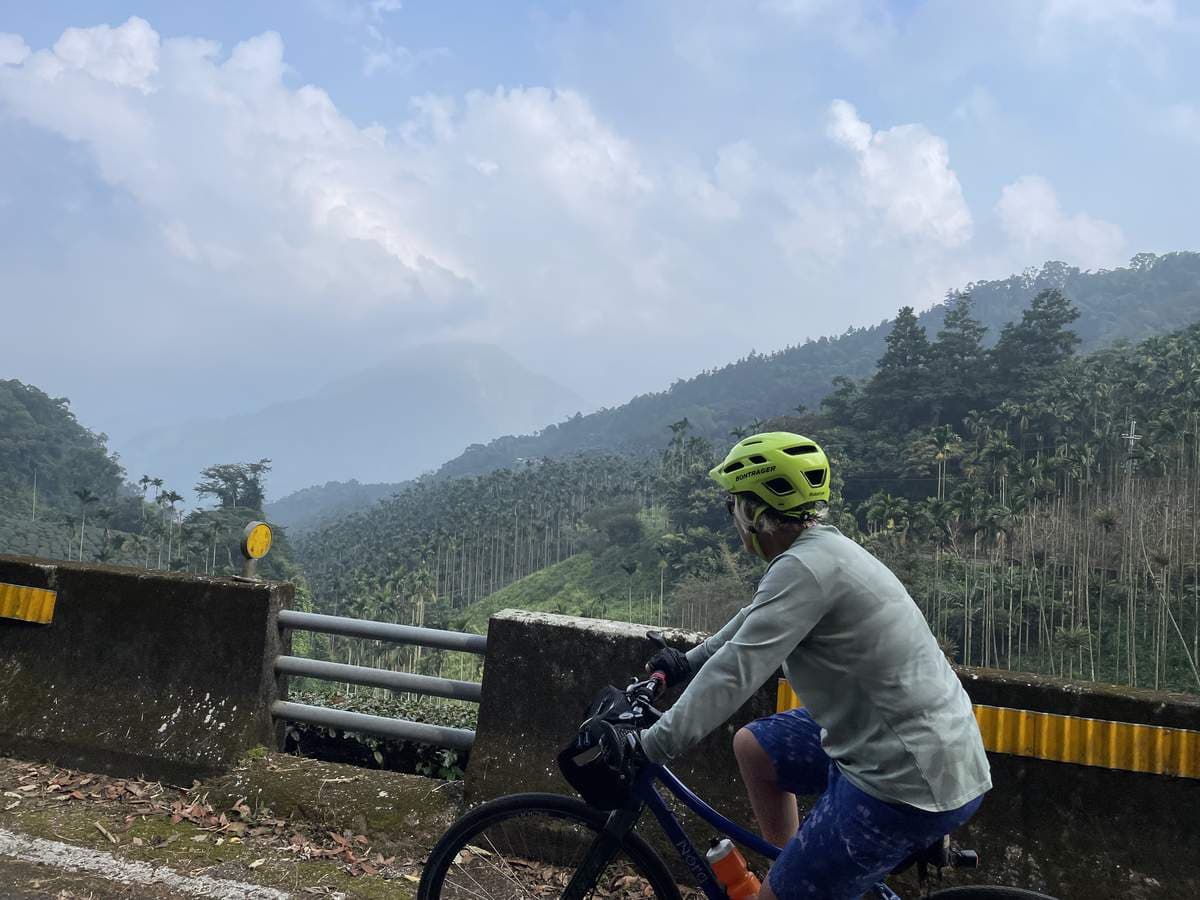
The bike itself is a Giant hybrid e-bike with a mid-drive motor and a removable battery, geared for Taiwan’s gradients. The road and gravel e-bike category exists, but in Taiwan the bikes you can actually rent are hybrids. Battery life depends on how you ride, but no e-bike will cover a big mountain day on a single charge. That is why the support van matters: it carries a charged spare on every trip, so a swap at the right point in the climb keeps you moving rather than walking. On the 16-day Full Island Tour the spare matters more again, because two weeks of back-to-back climbing days would otherwise leave the maths very tight.
You still pedal. There is no throttle on these bikes. The motor reads how hard you are pedalling and gives back a multiple of that, which you set on a small handlebar control. Uphill, you turn the assistance up. On the flat, you usually want it off and the bike rides like a slightly heavy road bike. Most clients have the system figured out by lunchtime on day one, and they settle into saving the high assist for the steep stuff.
Charging happens overnight at the hotel. The bike rolls out the next morning with a full battery, and the spare in the van is topped up on the road. This is one of those logistical details that genuinely matters and is one of the reasons Taiwan is easier to ride with a guided operator than self-guided. Charging an e-bike at the right voltage, in the right small mountain mingsu where the host speaks no English, with a route plan that does not exhaust the battery before you reach the next stop. That is not a problem most independent cyclists are set up to solve.
Which Pedal Taiwan Tours Suit E-Bikes Best
All four tours support e-bike rentals. Which one suits an e-bike rider depends on what you want from the trip.
The 5-Day East Coast Rift Valley is the easiest match. The terrain is forgiving, the days are moderate, and the e-bike is a tool for relaxing into the scenery rather than surviving a climb. Couples where one partner has been off the bike for a while regularly pick this combination, and it works almost every time.
The 7-Day King of the Mountains is the trip where an e-bike makes a specific dream possible. If the KOM has been on the list for a decade and the training has slipped, this is the cleanest route to actually riding it. The rest of the week is at altitude and the days are long, so the battery, the support vehicle, and the mechanic in the van are all working hard for you.
The 14-Day Discover Taiwan tour is the broadest. Kenting in the south, the East Coast, Taroko, the KOM, and the road back to Taipei. On an e-bike, the long days are sustainable for riders who would not finish them on a standard bike, and the KOM stops being the question that overshadows the rest of the trip.
The 16-Day Full Island Tour is the most ambitious. Full quan dao loop, every terrain on the island, the KOM in the middle. An e-bike here is what makes a 16-day cycling holiday a realistic option for riders who could not otherwise sign up for that volume. See our quan dao guide for the full route picture.
Honest Tradeoffs
E-bikes are not a free upgrade and we will not pretend otherwise.
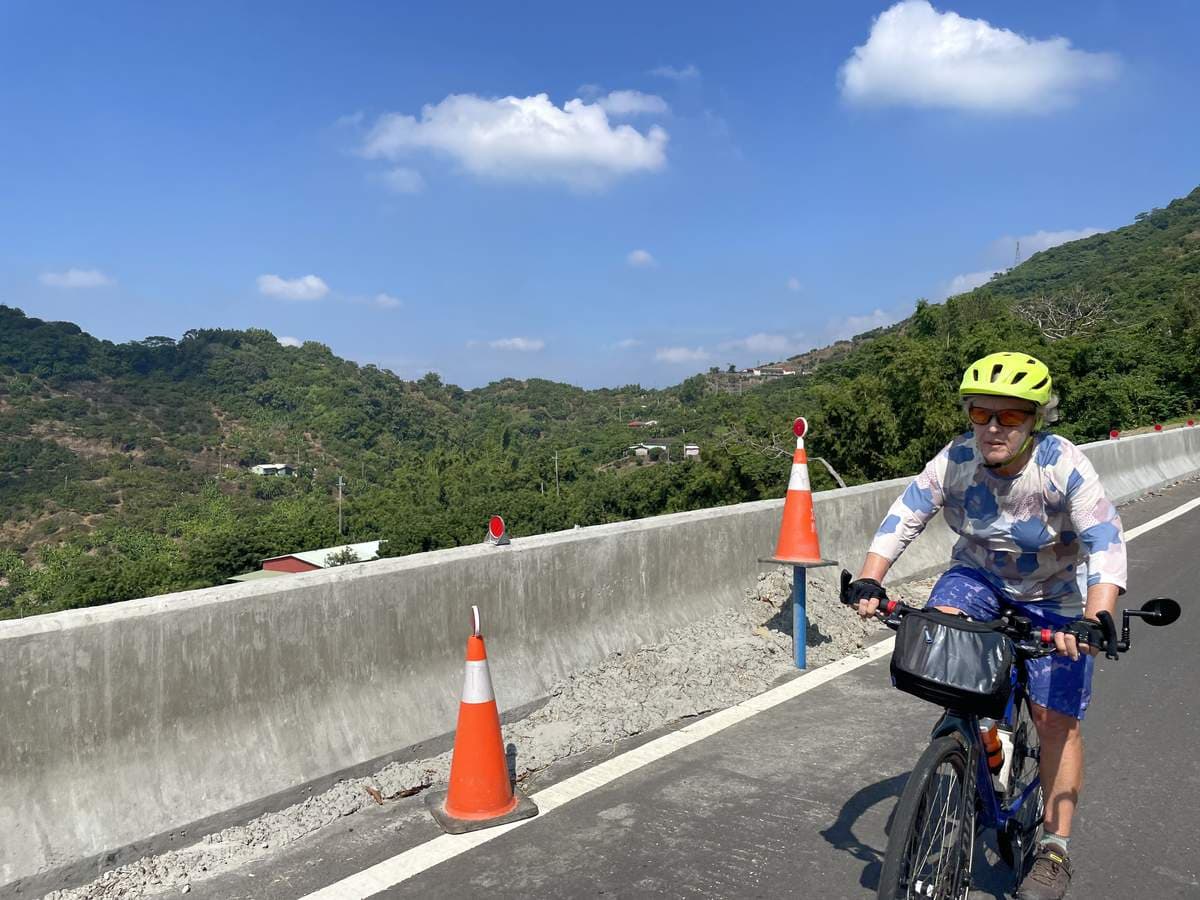
The bike is heavier. On the flat with the assistance off, you feel every extra kilogram. On descents you feel them slightly differently in the corners. The bike is still very capable, but it is not a 7-kilogram race bike.
The handlebar feels busier. There is a small display, a control panel, more cables. Riders coming off a clean road bike notice it for a day and then forget about it.
Battery anxiety is a small mental tax. Even with our spare in the van, you spend a little of every long climb thinking about percentage left. Most riders find this fades after the first day, once they have seen how the bike performs.
The rental adds to the trip cost. E-bike rental is priced as an add-on, and the number depends on the tour and the bike. We quote it inside your proposal so the total cost is on the table before you commit.
It does not erase the need to train. An e-bike does not turn a 20-kilometre Sunday rider into someone who will enjoy a 120-kilometre day in the mountains. The motor closes a fitness gap; it does not replace fitness entirely. The training plans in our training guide still apply, just at a more forgiving scale.
For most of the riders we hand an e-bike to, the tradeoffs are worth it inside the first hour of riding. The trip happens, the group stays together, and Taiwan gets to be the cycling destination it is rather than a fitness test.
Frequently Asked Questions
Can you ride the Taiwan KOM on an e-bike? Yes, with a battery swap. No e-bike will complete the 87.5 kilometres and 3,275 metres of climbing on a single charge, so our support vehicle carries a charged spare and meets you on the climb. With the swap handled, the KOM is well inside reach on an e-bike for riders who would not finish it on a standard bike.
Are e-bikes allowed on all Pedal Taiwan tours? Yes. We can arrange rental e-bikes for any of our four tours: the 5-Day East Coast Rift Valley, the 7-Day King of the Mountains, the 14-Day Discover Taiwan, and the 16-Day Full Island. Mention e-bikes in your enquiry and we will confirm availability for your dates.
What kind of e-bikes do you rent in Taiwan? Giant hybrid e-bikes with mid-drive motors and removable batteries. Road and gravel e-bikes exist as a category, but in Taiwan the rental fleet is hybrid. Bikes are sized to fit and serviced before every tour, and the spec is shared on enquiry and confirmed in writing before the trip.
How long does the battery last on a Taiwan climbing day? Battery life depends on how you ride, but e-bikes usually cannot cover a big mountain day on a single charge. That is why the support vehicle and the charged spare on every trip matter: a battery swap at the right point in the climb keeps the long, steep days well within range.
Are e-bikes useful for mixed-ability group cycling holidays? Yes. They are the cleanest way to keep a fitter and a less-fit rider on the same trip without one of you sitting in the van every afternoon. The fitness gap closes on the climbs, the group stays together, and the holiday works for everyone.
How much does it cost to rent an e-bike with Pedal Taiwan? E-bike rental is priced as an add-on to the base tour rate and depends on the bike, the tour length, and the season. We quote it inside your tour proposal so you can see the all-in number before deciding.
Curious whether an e-bike is the right call for your trip? Get in touch with a note on your recent riding, the rider you are travelling with, and the tour you have in mind, and we will come back with an honest read and a quote. For the wider planning picture, our complete guide to cycling in Taiwan is the place to start, or jump straight to our tours.