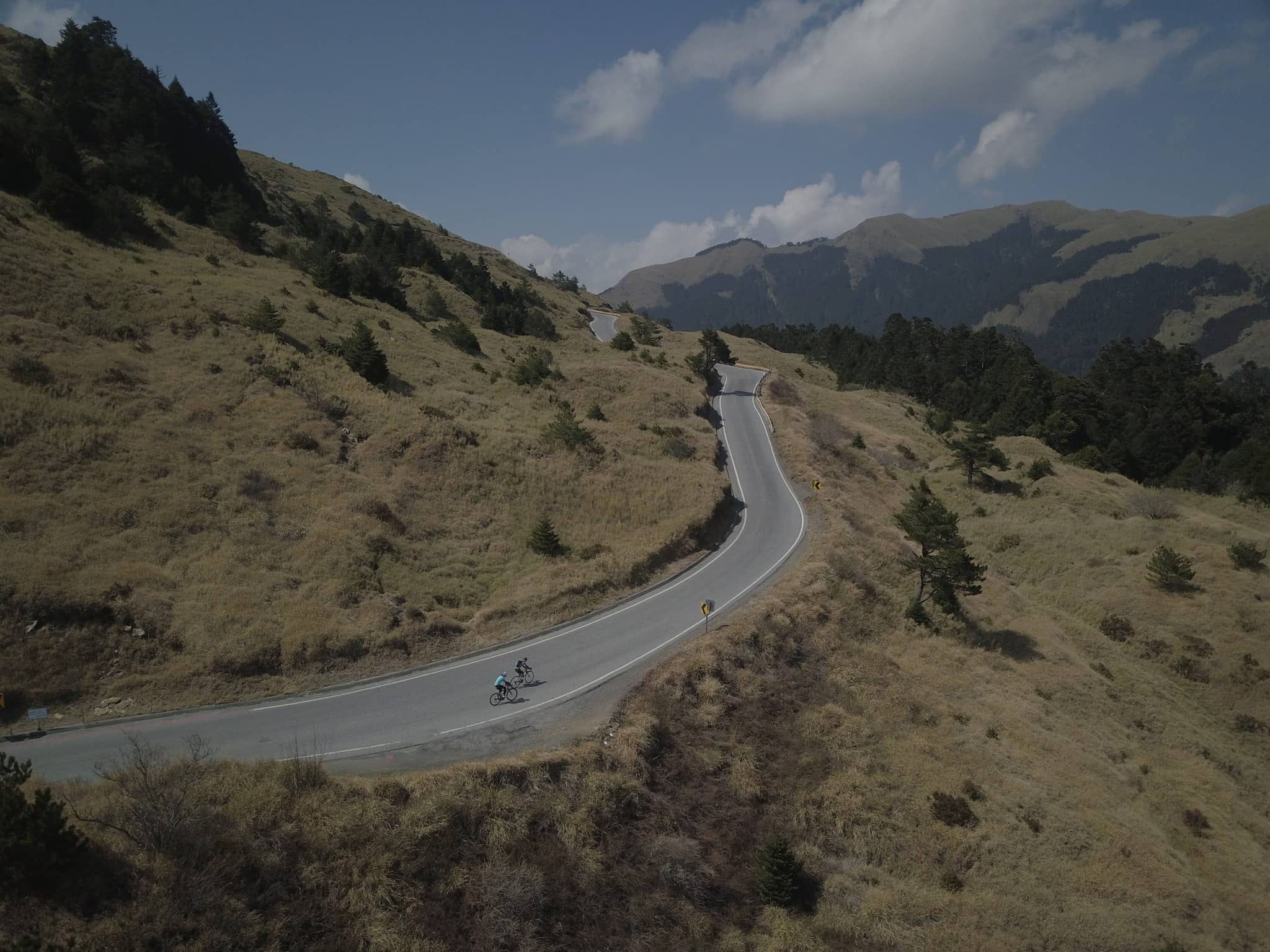
The Taiwan KOM Challenge is the annual one-day race up the longest paved road climb in the world. Every October, professional and elite amateur cyclists line up in Hualien on Taiwan’s east coast and ride to the top of Wuling Pass at 3,275 metres. Most of them suffer. Some of them break. A few finish quickly enough to put their name in the record books for one of the toughest hill climbs in cycling.
If you’ve decided to fly to Taiwan to watch the race, this is your guide to where to stand, what to expect from the course, and how to make the trip into something more than a single day at the roadside. Most of the readers we hear from after the event ask the same thing: how do I ride this route myself? The honest answer is that the race-day course is a public road. You can ride it any other day of the year, and a guided cycling tour built around the same climb is the simplest way to do it.
What the Taiwan KOM Challenge Actually Is
The Taiwan KOM Challenge is a 105-kilometre race that starts at sea level on Qixingtan Beach in Hualien and finishes at Wuling Pass. It is held every October and has run as an annual event for over a decade, drawing professional riders and competitive amateurs from around the world.
The course starts with a few rolling kilometres of warm-up before riders enter Taroko Gorge at sea level. From there, every metre of the next 87.5 kilometres heads uphill, finishing at the highest road on the island, 3,275 metres above where the race began.
For context, the Col du Galibier in the French Alps tops out after roughly 35 kilometres. The Taiwan KOM is more than twice that length and starts from the ocean. It is, on most accepted measurements, the longest continuous paved road climb in the world. Our full guide to cycling the Taiwan KOM covers the route in much more detail.
The race attracts a serious field. Pro Tour riders, national-team riders, and elite amateurs all show up because finishing well at the Taiwan KOM is a credible cycling achievement. The atmosphere in Hualien on race weekend reflects that. You’ll see far more bike traffic in the gorge in the days before the event than at any other time of year.
Race timings, course details, and entry rules can change year to year, so for current information, check the official event organisers. What follows is the bit that doesn’t change: where the race goes, what it looks like at each stage, and how to spectate well.
The Course, in Three Stages
The Taiwan KOM route divides cleanly into three sections that look and feel completely different from each other. Knowing this is what makes the difference between standing in the wrong place and standing in the right one on race morning.
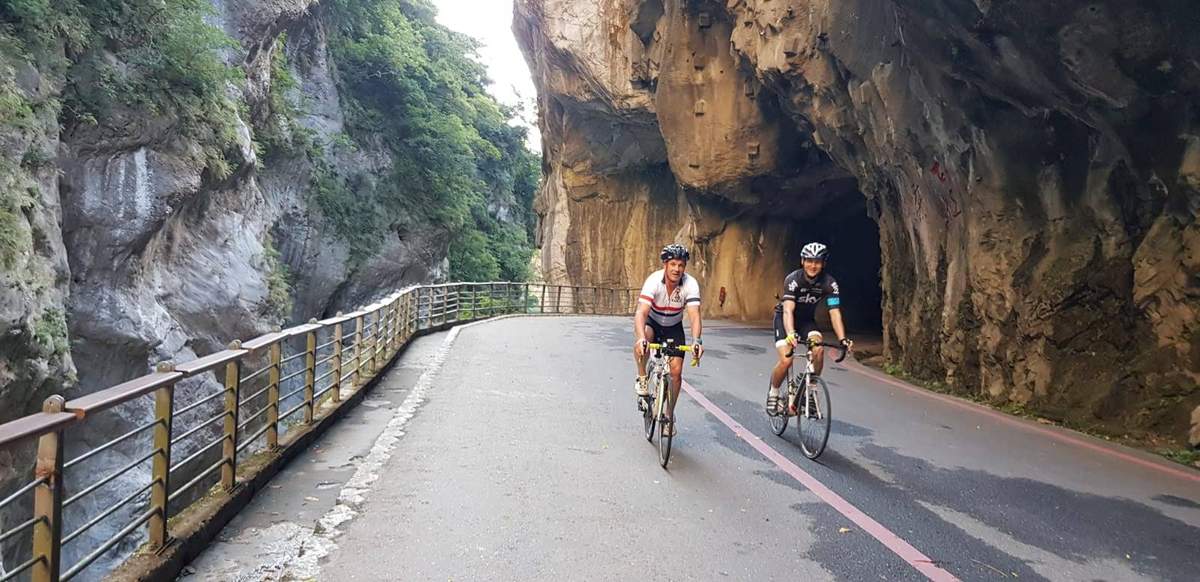
Section one: Taroko Gorge to Tianxiang. Twenty kilometres, around 500 metres of climbing. The first part of the climb proper runs through Taroko Gorge, where the road has been blasted directly into marble cliffs that rise hundreds of metres above the river. The gradients sit between 2 and 3 per cent, so the lead group rides through this section faster than first-time spectators usually expect.
Section two: Tianxiang to Dayuling. Roughly 57.5 kilometres, around 2,650 metres of climbing. The gorge walls fall away above Tianxiang and the road settles into a steady 4 to 5 per cent grade through dense cloud forest. This is where the race breaks apart. Riders who started too hard in the gorge come unstuck on this stretch, and the gaps between groups stretch into minutes rather than seconds.
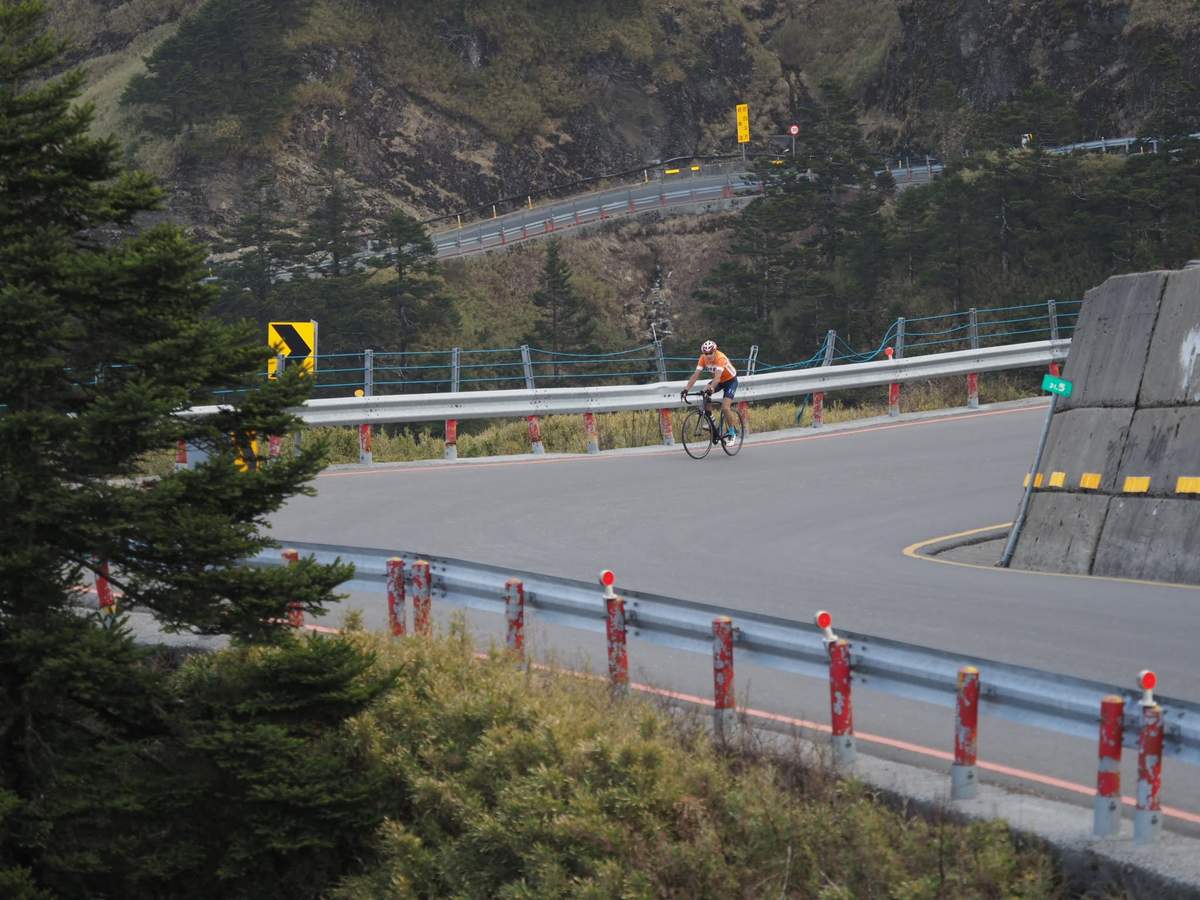
Section three: Dayuling to Wuling Pass. Ten kilometres, 1,100 metres of climbing. The final ten kilometres are the reason the Taiwan KOM is the climb it is. The road kicks to 15 to 18 per cent on the opening switchbacks, the cloud forest gives way to open alpine grassland, and altitude starts to bite for any rider who hasn’t acclimatised. This is also where most spectators want to be when the front of the race goes through.
The Best Places to Watch the Taiwan KOM Challenge
There are four good spots to watch the race, each with a different character.
The gorge entrance, at sea level. Easy to reach from Hualien. You’ll see the field roll out together and enter the gorge as one peloton. It’s a fast, bright, ordered moment, and logistically the simplest spot for anyone without local transport.
Inside Taroko Gorge. The gorge itself is one of the most dramatic stretches of road on the island, race or no race. Stand near Changchun Shrine or Swallow Grotto and you’ll watch the riders pass underneath sheer marble walls with the Liwu River running below. The light in the gorge is unusual, the road is narrow, and the visuals are some of the best on the course.
Tianxiang, at the 20-kilometre mark. Tianxiang has a 7-Eleven and a small temple complex above town, which makes it the only spot on the lower half of the climb where you can park, eat, drink, and use a bathroom without difficulty. By the time the leaders reach Tianxiang the race is still mostly together, so the pace is high and the energy is strong.
The final switchbacks above Dayuling. Logistically the hardest spot to reach, but the best one for atmosphere. By the time riders are above 3,000 metres, gaps are big, expressions are wrecked, and the climb is at its most theatrical. If you can get up here on race morning, by hire car, taxi, or as part of a tour group with a support vehicle, this is the moment of the race.
The summit at Wuling Pass is the official finish. Reach it and you’ll see the front of the race come over the line, then a long rolling parade of finishers as the morning stretches on. The temperatures at the top are noticeably colder than at the gorge, even in October. Bring more layers than you think you need.
Planning a Cycling Trip Around the Race
Most people who fly to Taiwan for the KOM Challenge don’t fly to Taiwan only for the KOM Challenge. The trip is a week or two, the race is one morning, and the rest of it is what you make of it.
A few things worth knowing as you plan.
Hualien is the right base for race weekend. Spectators stay in Hualien because the race starts there and the gorge is the most-watched section. Book early. October is one of the two peak cycling seasons in Taiwan and the city fills up quickly.
October is the best month to ride in Taiwan. The summer typhoon season is over, the air clears, and the temperatures at altitude are cold without being freezing. If you’ve come to watch a race, you’ve also come in the right window for the best riding the island offers. Our best time to cycle in Taiwan guide covers the seasons in more detail.
The east coast and the Rift Valley are right there. Two of Taiwan’s best cycling regions, the Pacific east coast and the East Rift Valley, sit immediately north and south of Hualien. A week of riding before or after race day on those roads, with the KOM as the centrepiece, is the trip most of our riders end up wanting after they’ve been to the event.
Why the Best Way to Watch is to Ride It Yourself
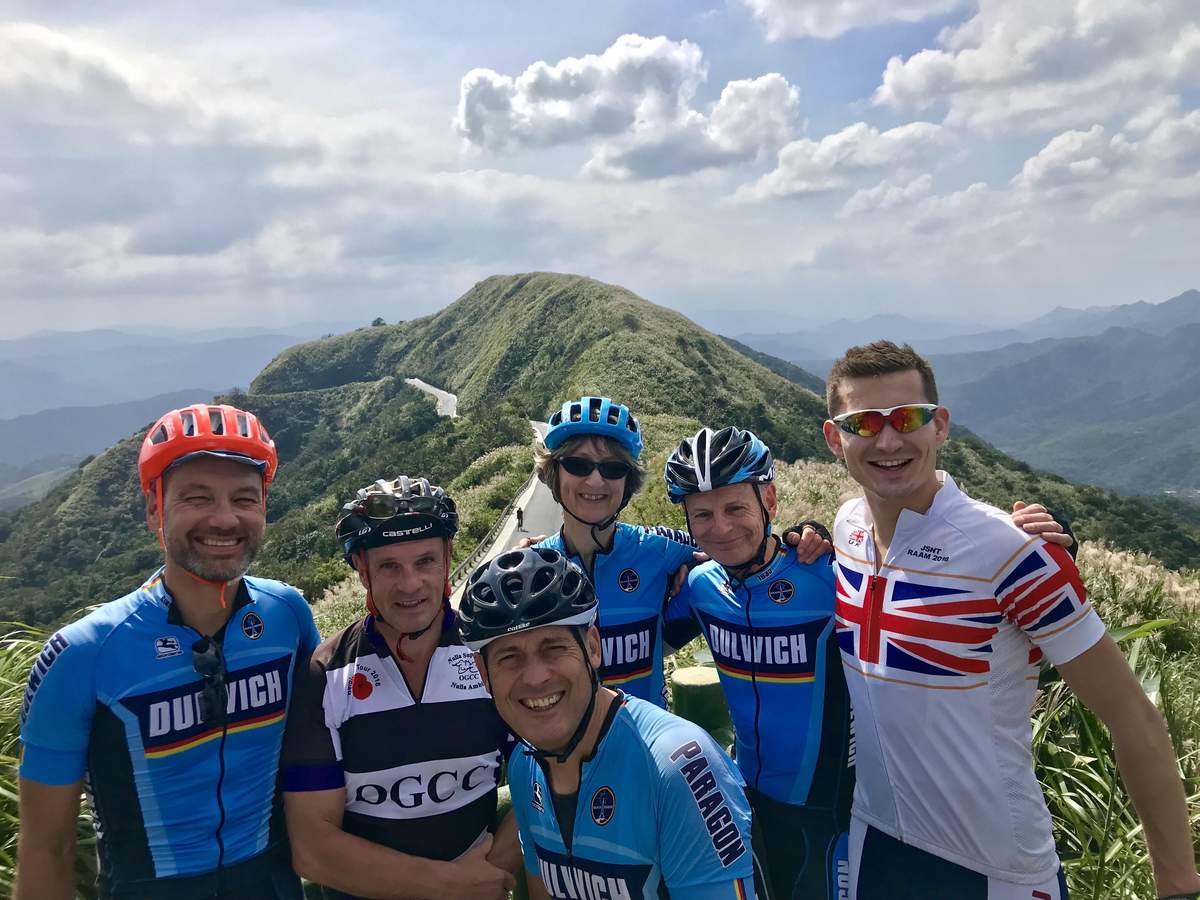
This is the part where we say what most Pedal Taiwan riders eventually figure out. Watching the Taiwan KOM Challenge is a fine experience. Riding the route yourself is a far better one.
Race-day spectating is a few hours at the roadside. Riding the route as part of a guided tour is a full week in which the climb itself is one day, with east coast cycling, Taroko Gorge by bike, and the rest of central Taiwan filling the rest of the trip. The roads are the same, the gradients are the same, and the photos at Wuling Pass count just as much.
There are also straightforward logistics. The Taiwan KOM route has effectively no food or water above Tianxiang on a normal day. Accommodation near the summit is hard to book and Songsuye Lodge has a long history of resold reservations and turned-away foreign guests. On race day, all of that is somebody else’s problem because it’s a race. On any other day of the year, you need to solve it yourself, or you need a guide who already has.
Our 7-Day King of the Mountains tour is built specifically around the same climb the pros race in October. Our 16-Day Full Island Tour puts the KOM in the middle of a full lap of Taiwan. Both run in the spring and autumn windows around the race.
Frequently Asked Questions
When is the Taiwan KOM Challenge held? The race is held every October. Exact dates change year to year, so check the event organisers for the current year’s calendar. October is also the start of Taiwan’s autumn cycling season, so it’s a strong window to plan a wider cycling trip around.
How long is the Taiwan KOM Challenge race? The full race is 105 kilometres from Qixingtan Beach in Hualien to Wuling Pass at 3,275 metres. It starts at sea level on the coast, and 87.5 kilometres of the course is continuous climbing, which is the figure that earns the route its title as the longest paved road climb in the world.
Where is the best place to watch the Taiwan KOM Challenge? Inside Taroko Gorge for the most dramatic visuals. Near the summit on the final switchbacks above Dayuling for the highest stakes and biggest gaps in the field. The gorge entrance is the easiest spot to reach without local transport. Tianxiang, at the 20-kilometre mark, is a good middle option with a 7-Eleven and a temple complex above town.
Can I ride the Taiwan KOM Challenge route myself? Yes. The course is a public road outside race day, so the climb is rideable any month of the year. Spring and autumn are the practical seasons because the weather at altitude is more predictable. Our 7-Day King of the Mountains tour follows the same route the race uses.
Is the Taiwan KOM Challenge open to amateurs? Race entry is managed by the event organisers and competition for places is high. If you want the experience of riding the Taiwan KOM route without racing it, a guided cycling tour is the simpler option, and the photo at Wuling Pass looks exactly the same.
Coming to Taiwan to watch the KOM Challenge race? Add the climb to your trip and ride it yourself. Enquire about our 7-Day King of the Mountains tour or pair it with a full island loop on the 16-Day Full Island Tour. For the broader picture, see our guide to cycling in Taiwan.