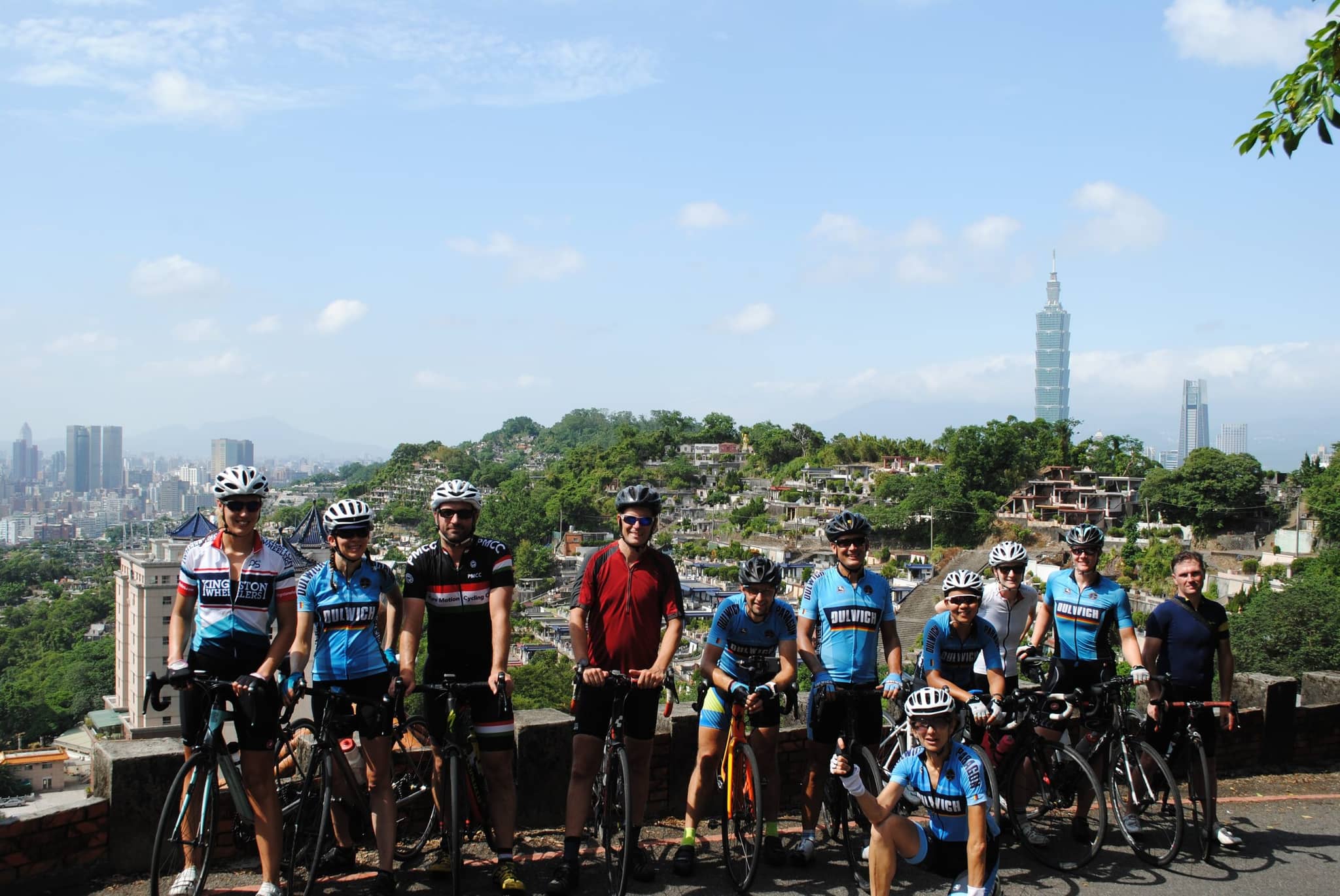
This local guide to cycling in and around Taipei opens with a question we hear a lot. Sometimes it comes through email before a tour, sometimes in the van transfer from Taoyuan Airport. “Is Taipei actually rideable?” Yes. The first morning in the city tends to argue otherwise. The scooters. The food carts. The expressways overhead. The background din. “It looks like the worst place I have ever cycled,” a client put it to us last spring. Then she rode the Maokong loop on day two and changed her mind. Once you have the right roads in your back pocket, cycling in and around Taipei is properly good, and the city has been quietly built around the bike in ways the street-level chaos does not advertise.
The five rides below are what we use with first-time visitors to make that case. Maokong south for the tea hills. Yangmingshan north for the dormant volcanoes. A three-day loop east through the Pingxi Valley to Keelung, down the Pacific coast to Jiaoxi, and back over the mountains into the capital. Plenty of locals run their own variants on these. The point is to give you a starting set.
Riding Out of Taipei: The Riverside Path Network
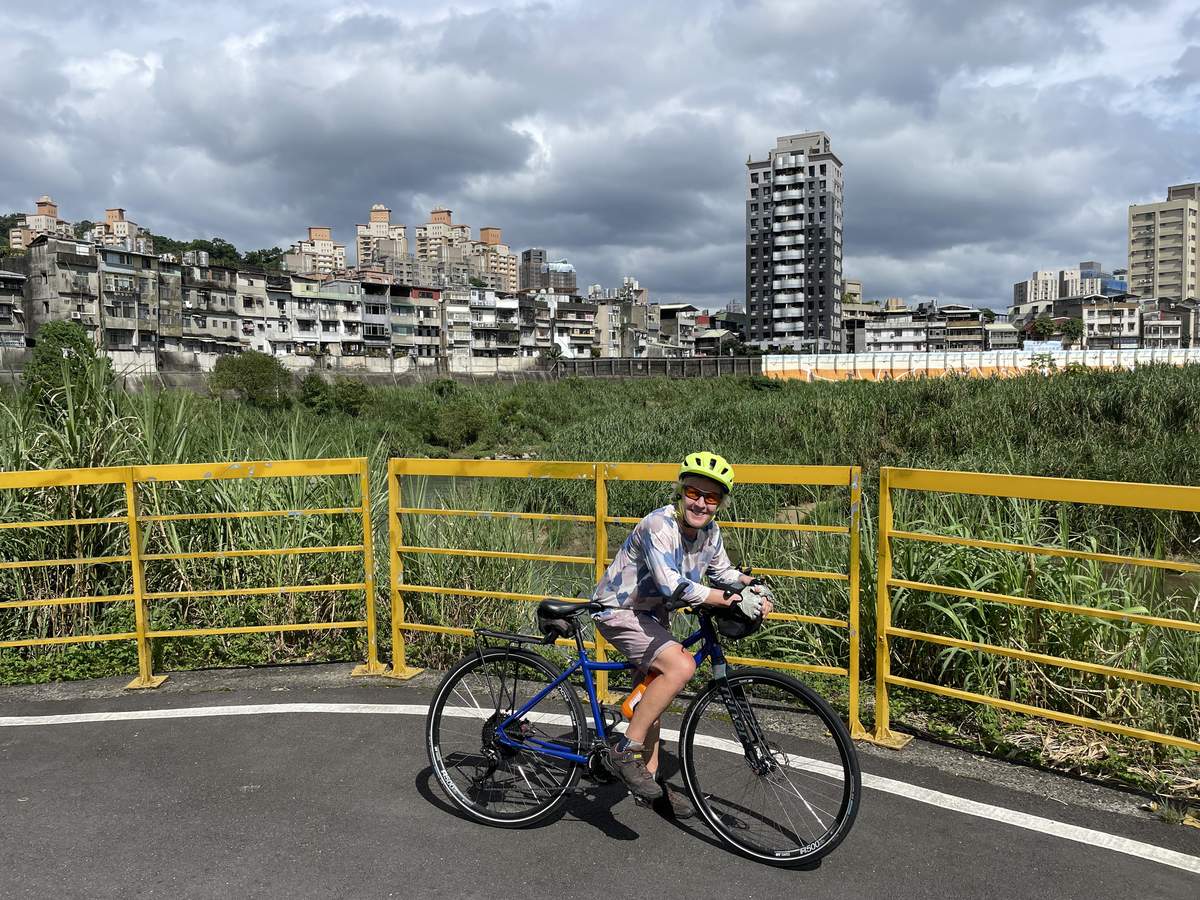
The single best piece of cycling infrastructure in Taipei is the riverside path network. Fully asphalted, fully separated from traffic, and running along every major river that crosses Taipei and New Taipei City. Whichever district you are staying in, you are rarely more than a few kilometres from an entry point.
The paths do most of the work of getting you out of the city. From Ximending you can drop onto the Tamsui River path and ride south through Wanhua and Xindian. From Nangang you can pick up the Keelung River and head out towards Neihu or, in the other direction, follow it east towards Pingxi. Every few kilometres there are public bathrooms, vending machines selling cold water, and small rest stops that are well used by the local cycling clubs at weekends. You can ride for an hour and not see a car.
The path network is also how nearly every ride out of Taipei starts. Pick a direction, ride along the river until the bike path runs out, and the city has somehow disappeared behind you and a quiet country road has appeared in front. That feature alone is what makes the cycling in and around Taipei work.
Maokong: A Half-Day Loop South into the Tea Hills
If your legs need a soft landing after a long flight, the Maokong loop is the right call. Out and back from central Taipei via the river network and the climb up to the tea plantations, it is flat the whole way to the foot of the hills and then 300 metres of climbing up to the top.
The bike path takes you south through Xindian Recreational Area. Stay on the north side of the river branch heading towards Taipei Zoo, and the path runs out just where the climb begins. The road up takes you past Dailaokeng Temple, which is the steep bit and ramps up to about 12 percent in places, then settles into a gentler climb to the top.
Maokong became famous as a tea destination because the north-facing slopes are ideal for growing and because of the proximity to National Chengchi University at the foot of the hill. Pub culture has never been a big thing in Taiwan, and so back in the 1960s and 70s students and lecturers from the university would walk up to the teahouses to socialise and argue. The teahouses became part of Taipei’s cultural identity. The city eventually built a cable car so people who do not want to climb the hill can still get up, and the National Tea Research Center sits at the top.
Whether or not tea is your thing, the views of the city from Maokong are exceptional on a clear day. The local restaurants serve traditional tea-inflected food: tea eggs boiled in spiced broth, sweet potato leaves with goji berries and tea oil. Eat, look at the view, then drop back down. You have two ways home: retrace the river path west and stop at Dadaocheng Wharf for a beer by the water, or continue east along the river and cut back into the Nangang end of the network via the Fu De Keng cemetery, which sounds odd but is one of the prettier ways into Taipei (more on that lower down).
Yangmingshan: Volcanoes and Hot Springs North of the City
The other day loop out of Taipei heads north into Yangmingshan National Park, a cluster of dormant volcanoes that sits directly above the city. It is a tougher day than the Maokong loop, with more climbing and steeper gradients, which makes it a good acclimatisation ride for anyone planning to tackle the central mountain range and the Taiwan KOM later in the trip.
Several routes cross the park. The one we use takes you over Fengguizui and across to Lengshuikeng via the more popular touristic area around Qishan Park. The route starts the same way as the rides out east, north along the river path past Neihu. The first climb begins at Dahu Park and runs about 600 metres up to the Fengguizui summit. The road is quiet because the area is less popular for hiking than the more central volcanoes, the views are exceptional, and there is a small restaurant at the top that serves pork shoulder with bamboo and fresh fried river shrimp if the first climb has worked up an appetite.
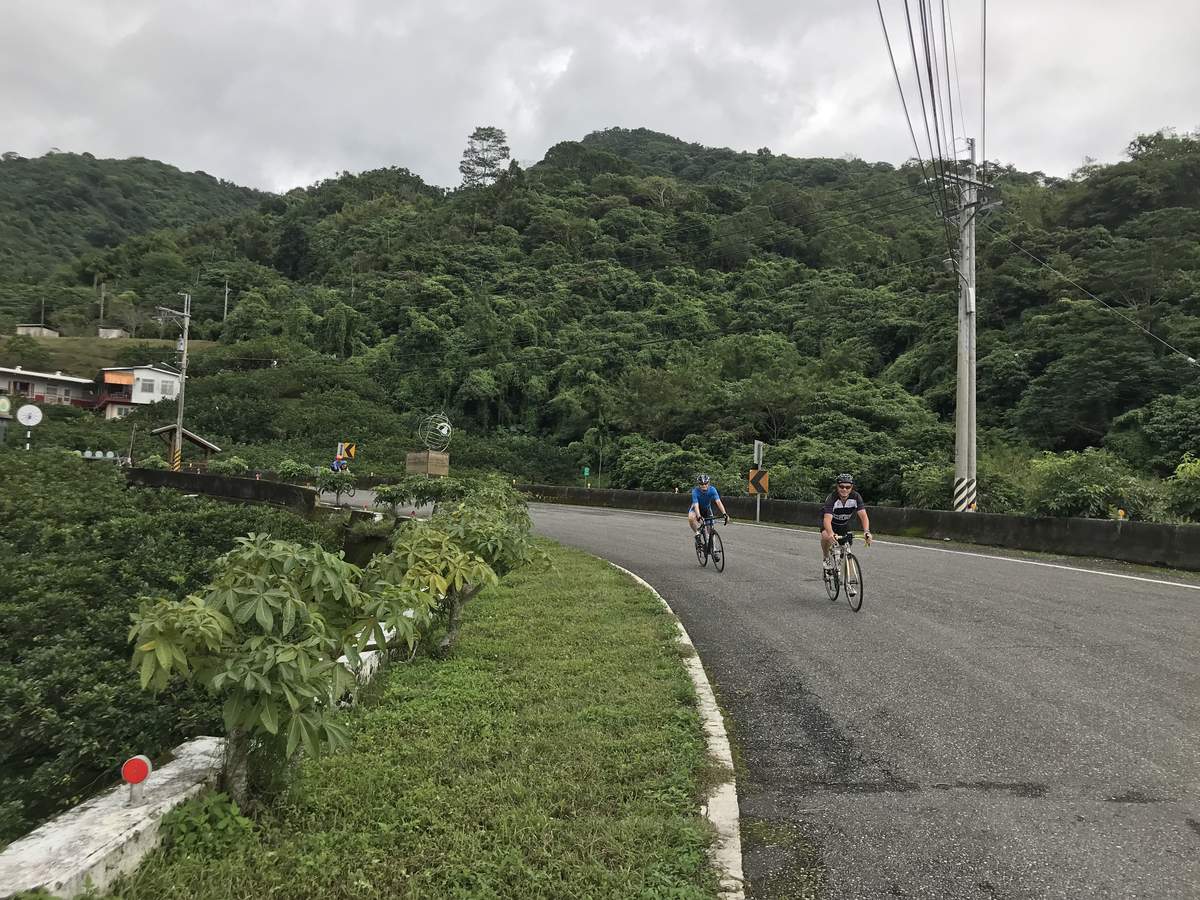
From the first summit you drop almost back to sea level before turning sharp right and climbing the second volcano of the day, which takes you up to 650 metres. The descent of the second climb opens out into the more popular tourist part of the park, around the Yangmingshan Flower Clock. From there you have three options for how to finish the day.
Option one is to keep climbing north on the Blue 2 road towards Xiaoyoukeng Recreation Area, where there is an open geyser that locals used to boil eggs in. The practice ended after some people started trying to fish the eggs out with bare hands. It costs another 450 metres of climbing.
Option two is Lengshuikeng hot springs, about five kilometres along. This is one of Taipei’s best-kept secrets. Old Japanese-era hot spring baths, no entry fee, no changing rooms, no showers, no towels, no bathing suits allowed. Men and women are segregated. Use the buckets to wash before getting in. Any local using the pools will be welcoming if you look unsure about the rules, which you will.
Option three is the descent down to Xinbeitou, which is the more developed hot spring area lower down the slope. Big public hot spring at Beitou Thermal Valley, bathing suits mandatory, plus a cotton cap you have to buy for 50 NTD on the way in. I am bald and the rules still apply. From Beitou it is a short ride back onto the river path and into the city.
The Northeast Loop: Three Days from Taipei to the Pacific
The three rides below make the most sense as a three-day loop out of Taipei. In theory you could do any of them as a single day with a train at one end, but the trains that take bikes are slow and inconsistent. If you decide to try, research the specific service carefully.
Day one: Taipei to Keelung via the Pingxi Valley. Out of Taipei you climb up through the Pingxi Valley towards Shifen, then over a mountain range that drops you down to the east coast. The valley has several entrances and the best one is a small, unnamed road that winds into it from the north in Xizhi District, which is hard to describe but exists on no major mapping platform. We send route files to clients riding this with us.
If you come into the valley from the south, stop in Shiding for a soy duck egg. There is a small stall by the side of the road just before the 106 junction selling the best duck eggs in Taiwan: soft-boiled in soy and spices, then served ice cold. They are a brilliant ride snack. From there a steady climb runs up the valley to Shifen, which translates as “ten portions”. The town was originally a mining village built around a railway line and only had ten families. When someone went down the line to buy supplies, they bought ten portions, one for every family. The town still sits around the active railway track. Every hour the vendors clear everything off the rails so a train can pass through.
Shifen is famous for the waterfall just below town and as the heartland of Taiwan’s annual sky lantern festival. People come year-round to release lanterns with wishes written on them from the railway track. Eat lunch from the street food vendors at the old street, but skirt around the south end where the stinky tofu sits. It is some of the most pungent on the island, and once you have walked within twenty metres of it you will understand what we mean.
Out of Shifen a second climb takes you to the high point of the route, where on a clear day you can see across to the Pacific. The descent is thirteen switchbacks down through a cemetery with exceptional fengshui, then past the squid fishing boats into Keelung. The port is the main harbour for goods moving in and out of Taipei, and the squid is what the city is known for.
Day two: Keelung to Jiaoxi. Two routing options exist for the second day, and both are good. The first runs out of Keelung along the coast to the Yingyang Sea and the Golden Waterfall. The waterfall is named for the layer of oxidants that have leached out of the hillside above and turned the falls gold under the right light. The “yin yang” effect in the sea below is the same chemicals running off into the water. From there it is a sharp climb up to Jiufen Old Town, the inspiration for Hayao Miyazaki’s “Spirited Away”, and over the 500-metre summit beyond.
The second option goes through Ruifang Valley and Houtong Cat Village. Houtong was so named because it had, and still has, a lot of cats. The local government has leaned into the theme to the point that the cat cafes outnumber the more sober displays at the village’s coal mining museum. Past Houtong the valley appears to dead-end into a hillside, but a converted railway tunnel now runs through it and out to Shuangxi. Note that the tunnel now requires a permit applied for in advance, so you cannot just rock up and ride through any more.
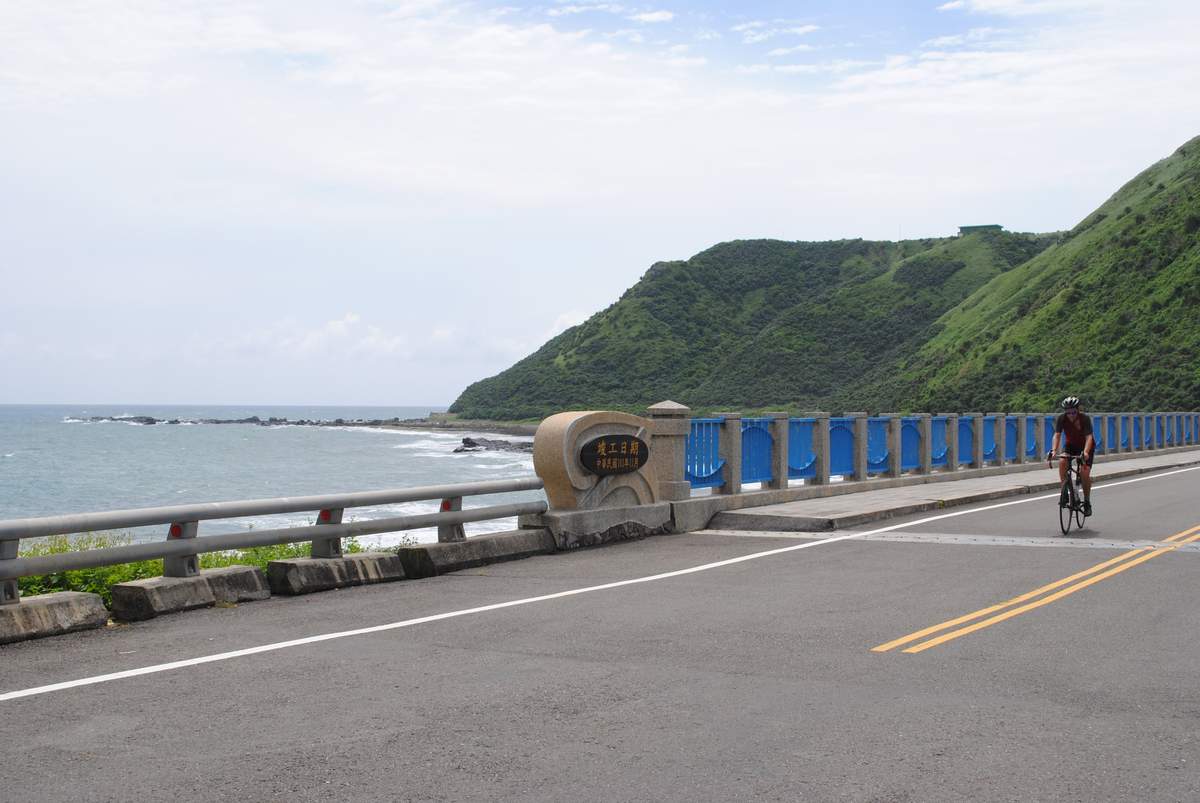
Both routes rejoin at Shuangxi and run together to the coast at Fulong Beach, where the local bien-dang lunchbox shops are excellent. From Fulong you can cut around the Sandiaojiao peninsula via the Old Caoling Railway Tunnel, which is another repurposed rail tunnel and which does not need a permit. The tunnel plays music as you ride through it, which is the kind of thing Taiwan does. The final leg is a flat run south along the coastal road to Jiaoxi, with a dedicated bike lane most of the way and views straight out across the Pacific.
Jiaoxi sits in the foothills of the range that separates Taipei and Yilan counties. It is famous for natural hot springs and for mountain chicken: whole chickens roasted to crispy perfection over a wood-burning, tandoor-style oven. It is a fantastic post-ride dinner.
Day three: Jiaoxi back to Taipei. There used to be one road over the mountains between Yilan and Taipei. Lots of slow heavy vehicles, lots of switchbacks, lots of trouble. The government eventually gave up on it and built a ten-kilometre tunnel straight through the mountain. The reason this matters for cyclists is that the old road is still there. Wide, well surfaced, almost no traffic. It is one of the great mountain climbs anywhere in Taiwan and would be on every cycling magazine’s “best climbs in Europe” list if it were in the Alps. The route takes you over two ranges, along the edge of Crocodile Lake, and down to the outskirts of Taipei.
From the edge of the city you can pick up the river path again, but if you are staying in the centre we suggest riding in through the Fu De Keng cemetery. This always gets funny looks. In Taiwanese culture cemetery placement is governed by fengshui: mountains behind, water in front. Steep slopes with rivers or seas at their base are ideal. The fengshui at Fu De Keng is so good that the cemetery has grown into Taiwan’s largest, and you can ride for five kilometres through it without realising you are next to the city. The roads are small, traffic is very light, and at the end of it you descend straight into the middle of Taipei with the Taipei 101 tower a few blocks away.
Where to Stay in Taipei
Three areas of Taipei work well as a base for cyclists, depending on what you want from the trip.
Best for culture: Ximending and Main Station. The old centre of the city, walking distance from Chiang Kai-shek Memorial Hall, Longshan Temple, Dihua Old Street, and the Ximending Night Market. Good MRT links to the rest of the city and to Main Station for the high-speed rail south to Kenting if you are starting a ride from there.
Best for hardcore riders: Nangang. A quieter area with modern business hotels near the Nangang Exhibition Center. What it lacks in centre-of-the-action energy it makes up for in cycling access. The river path is 100 metres north for easy access to Yangmingshan and Maokong, the quiet mountain roads into the Pingxi Valley start 200 metres south, and the Blue MRT line takes you downtown when you want to sightsee.
Best for burning both ends of the candle: Xinyi. The new centre of the city, built around Taipei 101 and the modern bar and restaurant scene. Good for craft beer after a ride and for hiking up Xiangshan at golden hour. The main downside is that the river path access is not as easy from here, but the Fu De Keng descent into the city sits close by, so it works for anyone happy to climb a short hill out of town.
Frequently Asked Questions
Is Taipei a good city for cycling? Yes, much better than first impressions suggest. The city has a dedicated riverside cycle path network running along every major river. You can leave a city centre hotel and be in quiet countryside within half an hour without touching a busy road. The local cycling clubs are very active at weekends and the scene is welcoming to visitors.
Where can you cycle out of Taipei? Five rides cover the area well. South to the Maokong tea hills, north into Yangmingshan National Park, and a three-day loop east through the Pingxi Valley to Keelung, then down the Pacific coast to Jiaoxi, then back over the mountains to Taipei. Each has a write-up above.
Do you need a permit to ride the old railway tunnels near Taipei? The Houtong to Shuangxi tunnel now requires a permit applied for in advance. The Old Caoling Railway Tunnel between Fulong and Daxi does not. Plans change, so check before relying on either tunnel for a self-supported route.
Can you take a bike on the train in Taiwan from Taipei? Some trains take bikes and some do not, the rules vary by line, and the bike-friendly services are slow and infrequent. If the plan depends on a train at one end of a ride, research the specific service carefully or you will end up stranded.
How does Taipei fit into a Pedal Taiwan tour? Most of our tours start or end in Taipei because nearly every international flight lands at Taoyuan. Our 16-Day Full Island Tour rides out of the city through the riverside network on day one and returns on the final day through the Fu De Keng cemetery. See our quan dao guide for the full route picture.
Should you ride Yangmingshan before tackling the Taiwan KOM? Yes, especially if jet-lag has flattened the legs. Fengguizui gives you 600 metres of climbing, which is honest work without being savage, and the gradients give you a taste of what is coming higher up the central mountains in a couple of days time. We often use it as a shakeout day for clients on the KOM trip.
Want to cycle in and around Taipei as part of a longer Taiwan trip, with the routes pre-loaded and the right restaurants pre-booked? Drop us a line with your dates and group size and we will put a route together. The Taipei riverside network is the starting line for our 16-Day Full Island Tour, and the city is where almost every rider’s Taiwan KOM week begins.